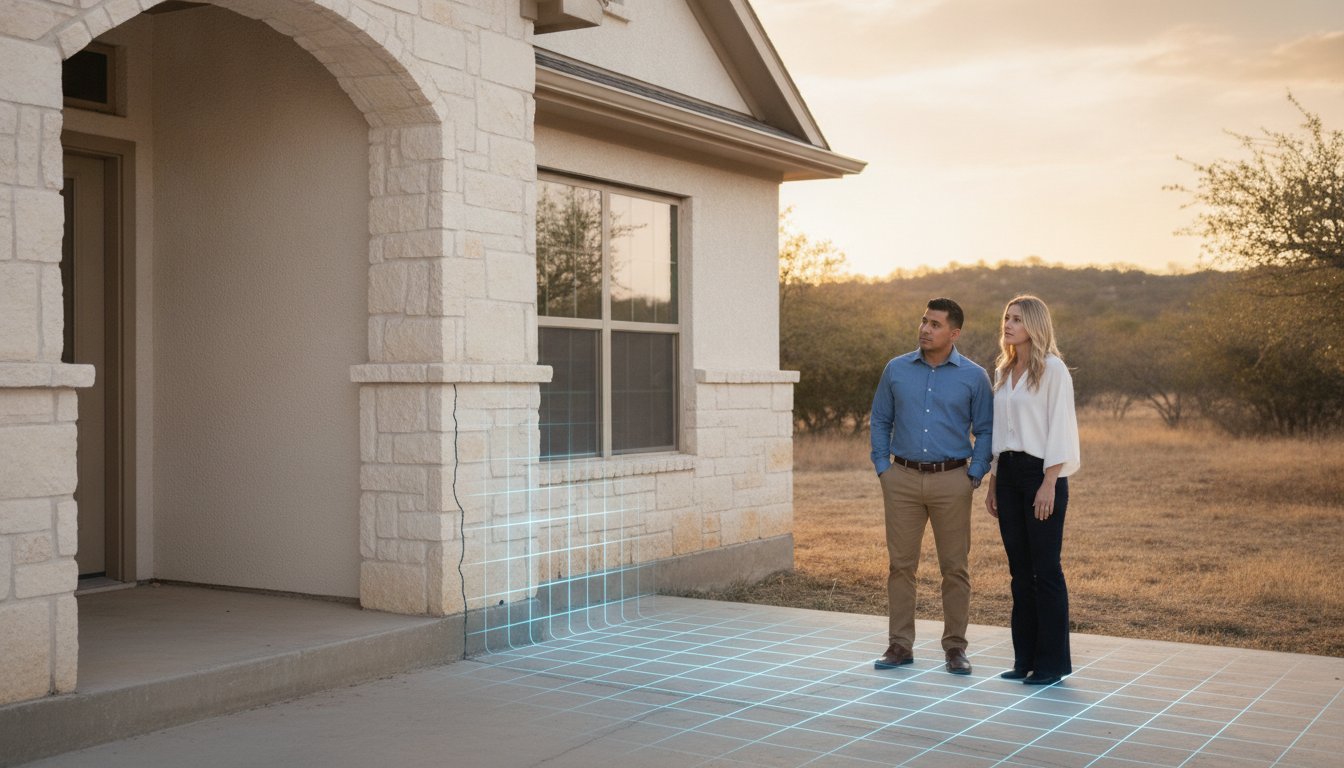
What if the hairline fracture appearing in your drywall isn't just a cosmetic annoyance, but the first sign of a $20,000 structural failure? For San Antonio residents, the region's notorious expansive clay soil makes foundation stability a constant operational concern rather than a hypothetical risk. You likely understand the anxiety of watching doors stick or floors tilt while questioning if your current policy will actually provide a safety net. Navigating homeowners insurance for foundation issues in San Antonio often feels like deciphering a complex legal puzzle, particularly when carriers draw sharp lines between natural settling and sudden accidental discharge.
This 2026 guide clarifies exactly when your coverage applies and how to bridge the gaps that standard Texas HO-A and HO-B policies leave behind. We'll examine the technical differences between covered perils and excluded maintenance, the financial impact of the HO-143TX endorsement, and the specific documentation required to secure a successful claim. By understanding these system-level protections, you can move from reactive repair fears to a proactive strategy for long-term property stability in the South Texas market.
San Antonio's geological landscape is divided by a significant boundary known locally as the "San Antonio Split." This division separates the rocky limestone of the Edwards Plateau to the west and north from the deep, unstable deposits of the Blackland Prairie to the east and south. Understanding this distinction is critical when evaluating homeowners insurance for foundation issues in San Antonio, as the soil type directly dictates the level of risk your structure faces. In 2026, the region has experienced an intensification of weather cycles, moving rapidly between extreme heat and concentrated rainfall. These fluctuations cause expansive clay soils to undergo radical volume changes, putting immense pressure on residential foundations.
The southern and eastern sectors of Bexar County are particularly susceptible to high concentrations of bentonite clay. This material acts like a sponge; it swells significantly when saturated and shrinks into hard, brittle plates during droughts. Most modern homes in the area utilize slab-on-grade foundations, which remain vulnerable to these shifts. Properties located within the Edwards Aquifer recharge zone also encounter unique challenges where soil meets porous rock, leading to uneven support across the footprint of the home. This geological instability often results in "heaving," where the soil pushes the slab upward, or "subsidence," where the ground falls away, leaving the foundation unsupported.
Detecting structural distress early can prevent a minor shift from becoming a total loss. Don't ignore subtle changes in your home's alignment. Homeowners should monitor their property for specific indicators:
Foundation health remains the most influential factor in San Antonio property valuations. A compromised slab can diminish a home's market value by tens of thousands of dollars. It's vital to ensure your homeowners insurance for foundation issues in San Antonio is structured correctly before a crisis occurs. Proactive monitoring and understanding the technical limitations of your soil type are the first steps toward securing your investment.
Standard Texas homeowners insurance policies are designed to protect against specific, named perils rather than general structural maintenance. When evaluating homeowners insurance for foundation issues in San Antonio, it's essential to recognize that most standard forms, including the basic HO-A, explicitly exclude damage resulting from earth movement or soil expansion. Coverage only triggers when a "sudden and accidental" event occurs. This means the damage must be the immediate result of an unforeseen incident, not a gradual deterioration that developed over several years.
Insurers apply the "Proximate Cause" rule to determine claim validity. This legal principle identifies the primary event that set the damage in motion. If a covered peril, such as a fire or a massive explosion, causes the foundation to crack, the claim is typically valid. However, if the primary cause is determined to be the natural contraction of San Antonio's clay soil, the insurer will likely deny the claim, even if a minor plumbing leak was present. Distinguishing between these causes requires technical precision and often professional intervention.
Industry data suggests that approximately 90% of foundation claims are initially denied because they are categorized as "wear and tear" or "normal settling." Homeowners must distinguish between cosmetic hairline cracks, which are usually less than 1/16th of an inch, and structural failures characterized by wider gaps or displacement. In the context of Texas insurance exclusions, settling is defined as the natural, gradual movement of a structure as the underlying soil compresses or shifts over time due to seasonal moisture changes. Because this process is predictable in South Texas, carriers don't consider it an insurable risk under a standard policy.
While soil shifts are excluded, several specific events do trigger coverage under a standard policy. These include:
Understanding these nuances is the first step in ensuring your property remains protected against unexpected structural costs. To verify if your current policy provides adequate protection or to explore more robust options, you can consult with a specialist who understands the specific exclusions prevalent in the San Antonio market.
While standard policies generally exclude earth movement, the "slab leak" exception represents a critical avenue for recovery in the Texas insurance market. When a pressurized plumbing line bursts beneath a concrete slab, the resulting soil saturation can lead to rapid structural shifts. This scenario often serves as the primary mechanism for a successful claim involving homeowners insurance for foundation issues in San Antonio. However, a standard policy without specific enhancements often leaves the homeowner responsible for the most expensive portions of the recovery process. Carriers frequently distinguish between the cause of the loss and the resulting damage, which makes specific endorsements a operational necessity for local properties.
One of the most complex aspects of a foundation claim is the distinction between "access" costs and "repair" costs. In a typical slab leak scenario, your policy may cover the expensive process of jackhammering through the concrete to reach the broken pipe. This is known as "Tear Out and Replace" coverage. Surprisingly, the base policy often does not cover the actual repair of the plumbing pipe itself, as that is considered standard home maintenance. In 2026, ensuring your policy includes robust "Tearing Out and Replacing" language is vital. Without it, you could face thousands of dollars in excavation costs before the actual foundation stabilization even begins.
To bridge the gaps left by standard HO-A and HO-B forms, San Antonio homeowners should evaluate specific endorsements that provide targeted structural protection. The HO-143TX, or the Slab Foundation Water Damage Endorsement, is arguably the most important addition. This rider extends coverage to the foundation itself when damage is caused by a covered water event, such as a sudden slab leak or a burst supply line. Without this specific rider, the insurer might pay to fix the water damage in your home but deny any repairs to the underlying slab.
Continuous or repeated seepage and leakage riders provide another layer of security. These endorsements are designed for slow-developing issues that don't meet the "sudden and accidental" threshold. Because San Antonio's expansive clay can shift gradually due to a pinhole leak, these riders offer a safety net for damage that might take months to become visible. Auditing your current declarations page for these specific Texas endorsements is a necessary step in protecting your property's long term value. Not all carriers use identical language, so comparing the technical definitions of "foundation coverage" across multiple providers is the only way to ensure your system of protection is truly comprehensive.
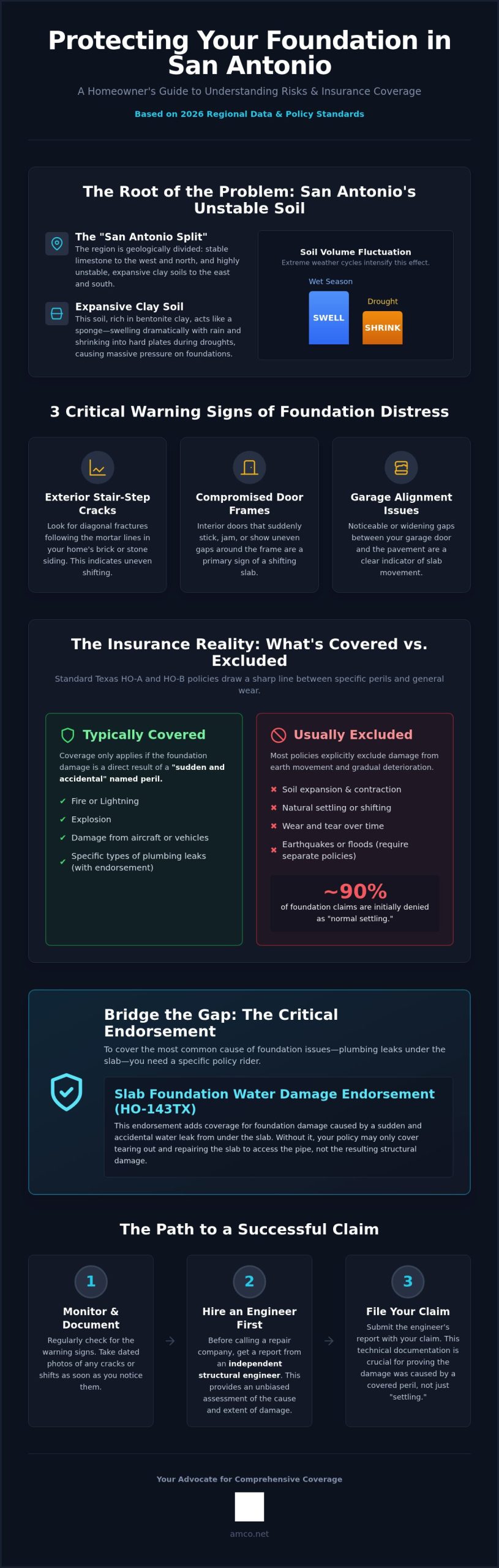
Successfully navigating a foundation claim requires a methodical approach that begins long before you contact your carrier's claims department. Because insurers scrutinize homeowners insurance for foundation issues in San Antonio with high precision, the burden of proof rests on the property owner to demonstrate that a covered peril caused the damage. Following a structured system of documentation and professional consultation is the most effective way to protect your financial interests.
In San Antonio's climate, maintaining consistent moisture levels in the soil surrounding your slab is the best defense against structural failure. During the intense heat cycles of 2026, the Blackland Prairie clay can pull away from the foundation, leading to subsidence. Using a soaker hose placed 12 to 18 inches from the slab helps keep the soil hydrated and stable. Additionally, ensuring your gutters and downspouts direct water at least five feet away from the home prevents the "heaving" caused by oversaturation. Proper drainage is a key factor insurers look for when determining if a homeowner has met their maintenance obligations.
When a claim is disputed, you might consider hiring a public adjuster to negotiate on your behalf. These professionals specialize in the technical language of the "Proof of Loss" statement, which is a formal document detailing the extent of the damage and the cost of restoration. However, working with an independent agency from the start provides a distinct advantage. Because we've served Texas property owners since 1987, we understand the specific carrier exclusions that often lead to disputes. You can learn more about these regional nuances in our Homeowners Insurance in Texas: A 2026 Guide for Houston & Beyond. If you're concerned about your current coverage limits, you should request a comprehensive policy review to ensure your foundation is adequately protected before the next drought cycle begins.
Securing the right protection for your slab or pier-and-beam structure requires more than a standard policy search. Because "Big Name" captive agents are restricted to the products of a single carrier, they often lack the flexibility to navigate the highly specific exclusions found in Texas property contracts. An independent agency operates differently. Since 1987, AMCO.NET LLC has focused on matching San Antonio property owners with carriers that provide the most robust structural endorsements. We compare foundation clauses across dozens of Texas-based and national providers to ensure your homeowners insurance for foundation issues in San Antonio isn't just a paper promise, but a functional system of recovery.
Our consultative approach extends to selecting the appropriate deductible for structural risks. While a higher deductible can reduce your monthly premium, it may create a significant financial hurdle during a foundation event. We help you evaluate the technical trade-offs between immediate savings and long-term liability. By analyzing the "Tear Out and Replace" limits of various carriers, we ensure you aren't left paying out-of-pocket for the excavation costs that typically accompany a slab leak repair. This level of localized expertise is vital in a market where soil stability is never guaranteed.
San Antonio's diverse architectural history requires a tailored insurance strategy. A historic home in King William, often built on a pier-and-beam system, faces different structural vulnerabilities than a modern slab-on-grade build in Stone Oak. We understand how the Edwards Plateau limestone and the Blackland Prairie clay affect these different construction methods. Our team helps you find the "sweet spot" between premium costs and foundation protection by selecting riders that reflect the specific age and engineering of your home. Having a local agent who understands Bexar County soil means your policy is built for the ground you actually live on.
If you haven't audited your policy since the 2026 weather cycles began, your property may be under-protected. Our evaluation process identifies gaps in your current coverage, specifically looking for restrictive "settling" language that could lead to a claim denial. If we find that your current carrier has narrowed their structural endorsements, we manage the process of switching you to a provider with better terms. This proactive review is a critical component of maintaining your home's market value and your personal financial stability. You can protect your San Antonio home with an AMCO expert review to ensure your homeowners insurance for foundation issues in San Antonio meets the highest professional standards.
San Antonio's geological landscape and the extreme weather patterns of 2026 require a specialized approach to risk management. Relying on a standard policy without specific endorsements like the HO-143TX often leaves property owners exposed to the full financial weight of structural repairs. By distinguishing between settling and sudden accidental discharge, you can better navigate the complexities of homeowners insurance for foundation issues in San Antonio. Effective protection combines proactive maintenance, such as consistent soil hydration, with a policy structure that accounts for the regional slab leak exception.
AMCO.NET LLC has served Texas since 1987, providing the localized expertise necessary to compare multiple A-rated carriers. Our independent status ensures that your coverage is selected based on technical merit and structural resilience rather than a single carrier's limitations. Don't wait for visible cracks to appear before verifying your policy's structural limits. You can Get a San Antonio Homeowners Insurance Quote with Foundation Protection today to ensure your investment remains stable for years to come. Your home's foundation is its most critical system; protecting it requires a partner who understands the ground beneath it.
Texas law doesn't mandate that insurance carriers include foundation coverage in a standard residential policy. The Texas Department of Insurance allows companies to exclude earth movement, shrinkage, and settling from their base forms. Consequently, most standard HO-A and HO-B policies explicitly list these as excluded perils. Property owners must usually purchase specific endorsements or riders to secure protection against structural damage caused by water leaks or other covered events.
Foundation cracks resulting from drought or seasonal heat cycles aren't typically covered by standard homeowners insurance for foundation issues in San Antonio. Insurers categorize drought-related damage as earth movement or settling, which are standard policy exclusions. Coverage only triggers if the crack is the direct result of a covered peril, such as a sudden plumbing failure. Maintaining soil moisture levels is considered a homeowner maintenance responsibility rather than an insurable risk.
The cost of adding a foundation rider varies based on the carrier, the age of the home, and the specific limits of the endorsement. Factors like your property's construction type and the selected deductible will influence the final premium adjustment. Because AMCO.NET LLC represents multiple Texas carriers, we recommend a personalized policy review to identify the most cost-effective options. This allows you to compare different endorsement structures and technical definitions of coverage across the market.
You can often secure coverage, but carriers will likely exclude any pre-existing structural damage from future claims. Most insurers require a disclosure of known issues or a professional inspection during the underwriting process in 2026. If active foundation movement is detected, the carrier might require repairs to be completed before issuing a new policy. An independent agency can help you find carriers that are more flexible with properties that have a history of stabilization.
Insurance companies typically only cover the cost of a structural engineer if the inspection is part of a valid claim for a covered peril. If you're hiring an engineer for a routine maintenance check or to investigate gradual settling, the expense is usually an out-of-pocket cost. However, if a sudden slab leak occurs, the professional assessment required to determine the scope of damage and the necessary "tear out" may be included in the claim settlement.
Coverage for foundation damage caused by a swimming pool leak depends on your specific policy language and added endorsements. While some policies cover the accidental discharge of water, many standard Texas forms exclude damage to the foundation slab itself unless you have a specific water damage rider. It's essential to verify if your coverage extends to underground structures and the resulting soil saturation that can lead to heaving or subsidence under the primary residence.
A foundation warranty is a service contract with a repair company covering the workmanship and materials of a specific repair project. Conversely, homeowners insurance for foundation issues in San Antonio is a policy designed to protect against sudden, accidental losses caused by covered perils like fire or plumbing failures. While a warranty might address a failing pier, insurance is intended to cover broader structural restoration costs resulting from unforeseen and non-gradual events.