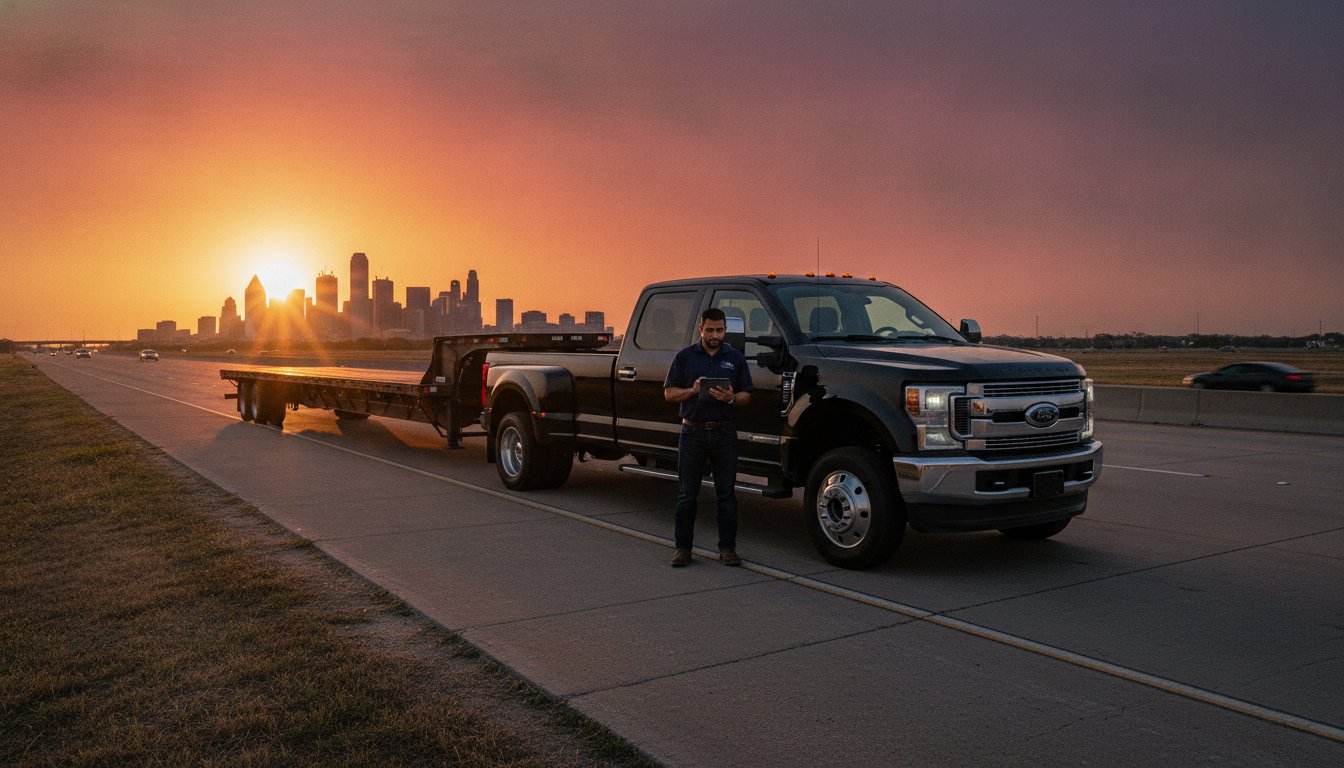
Why do most new owner-operators in the Lone Star State pay significantly more for their initial coverage than they actually need to? It's a common frustration to watch your projected revenue disappear into high premiums before you've even cleared your first 1,000 miles. You likely already understand that securing hot shot trucking insurance is the most significant hurdle to launching your authority, particularly when federal and state requirements often feel like a moving target.
This guide provides the technical clarity you need to secure affordable, compliant coverage that meets both FMCSA and TXDOT standards for 2026. We've drawn on nearly 40 years of experience in the Houston, Dallas, and San Antonio corridors to help you avoid the common filing errors that delay your start date. You'll learn how to structure cargo policies for high-value expedited loads and discover specific strategies to lower your overhead while ensuring your certificates of insurance are ready the moment a broker asks for them. By the end of this article, you'll have a clear roadmap to maintaining a profitable, fully insured operation on Texas roads.
Hot shot trucking insurance is a specialized form of commercial coverage designed for Class 3, 4, and 5 vehicles that transport expedited freight on a for-hire basis. Unlike traditional long-haul trucking that relies on Class 8 semi-trucks, hot shotting utilizes medium-duty pickups to deliver time-sensitive loads to specific destinations. This sector of the transportation industry requires a distinct insurance structure because the risk profile differs from both standard commercial auto and heavy-duty freight operations. It's a hybrid model that demands high liability limits while accounting for the unique mechanics of smaller power units.
The "dually" factor creates a common point of confusion for new owner-operators in Texas. While a Ram 3500 or Ford F-350 might serve as a personal vehicle, its status changes fundamentally the moment it's used to haul freight for a fee. Standard policies don't account for the increased mileage, weight, and liability exposure inherent in commercial transport. In the 2026 market, insurers look closely at whether you operate as a for-hire carrier or a private fleet. For-hire carriers, who transport goods owned by others, must secure specific federal and state filings that private fleets typically don't require to stay legal.
Establishing a "New Authority" in 2026 involves more than just registering with the FMCSA. It requires an insurance partner who understands the nuances of expedited logistics. Carriers often face scrutiny during their first year of operation. Having a policy that demonstrates technical compliance is essential for securing high-quality loads from brokers who demand proof of professional-grade hot shot trucking insurance before they'll even talk to you.
Successful hot shot operations typically utilize Class 3 through Class 5 trucks. These vehicles, such as the Ram 4500 or Ford F-450, offer the torque and Gross Vehicle Weight Rating (GVWR) necessary to pull gooseneck or lowboy trailers safely. Your GVWR is a critical metric; it determines your mandatory liability limits and dictates whether you fall under specific federal safety regulations. Hauling a 40-foot flatbed requires specialized trailer interchange or non-owned trailer coverage to protect the equipment and the cargo it carries across the state.
Attempting to haul freight under a personal auto policy is a significant risk that often leads to denied claims and canceled coverage. Every standard Texas personal policy contains a "commercial use" exclusion. If an accident occurs while you're under dispatch, your personal insurer will likely refuse to pay for damages or medical expenses. This gap leaves your personal assets vulnerable to litigation. To mitigate these risks, operators should look toward comprehensive commercial trucking insurance Houston solutions. These policies provide the foundational protection required for business operations, often including Commercial General Liability (CGL) insurance to cover non-trucking risks like accidents at a loading dock or delivery site. Transitioning to a dedicated commercial policy ensures that your business remains solvent even in the face of a total loss.
Constructing a robust policy for hot shot trucking insurance requires more than just meeting the bare legal minimums. Primary Auto Liability serves as the mandatory foundation for your FMCSA compliance. While federal regulations often specify a $750,000 minimum for vehicles over 10,000 lbs, most brokers and shippers in the 2026 market won't even consider a carrier with less than $1,000,000 in coverage. This protection is designed to cover bodily injury and property damage to third parties in the event of an at-fault accident, acting as the primary shield for your business assets.
Beyond liability, physical damage coverage is vital for protecting your specific investment. This includes both collision and comprehensive protection for your truck and trailer, ensuring that a single incident doesn't end your career. For times when you aren't under dispatch, Non-Trucking Liability (NTL) provides essential protection. Organizations like the Owner-Operator Independent Drivers Association emphasize that NTL is a critical gap-filler, covering the truck when it's used for personal errands rather than commercial hauling. Without it, you risk a total loss during a simple trip to the grocery store or a repair shop.
Motor truck cargo insurance is the second pillar of your operation. It protects the expedited freight you carry from theft, fire, or transit damage. Because hot shotting often involves high-value machinery or urgent parts, your cargo limits must be precisely calibrated to the loads you accept. If you're looking to refine your coverage strategy, consulting with the professionals at amco.net can provide the technical clarity needed to balance premium costs with comprehensive protection.
Many hot shotters face significant scrutiny from brokers regarding their cargo limits. While a $100,000 limit is often considered the industry standard, expedited freight frequently carries a higher valuation. It's important to review your policy for "unattended vehicle" clauses. These exclusions can void a claim if your load is stolen while the truck is left parked at a rest stop or hotel. You can find more detail on these specific technical nuances in our comprehensive guide to insurance in Houston, which breaks down how to align your limits with your specific hauling niche.
The distinction between these two coverages is often the difference between getting a load and being rejected at the terminal. Trailer interchange insurance covers damage to a trailer you don't own while it's in your possession under a written interchange agreement. In contrast, non-owned trailer coverage provides similar protection but typically applies when no formal interchange agreement exists. Brokers often mandate one or the other depending on the equipment being used. Identifying which filing is required by your specific load boards is a critical step in maintaining operational continuity.
Securing a policy is only the first step toward operational legality. To actually activate your authority, your insurance provider must submit specific electronic filings to federal and state agencies. These filings serve as official verification that your hot shot trucking insurance meets the mandatory financial responsibility limits. Without these digital handshakes between your insurer and the regulators, your MC or TXDOT number will remain in a "pending" or "inactive" status, regardless of how much you've paid in premiums.
The most critical federal filing is the MCS-90 endorsement. This isn't a separate insurance policy; it's a guarantee to the public that your primary liability coverage is in place and meets the FMCSA insurance requirements. If your operation involves interstate commerce, you'll also likely need a BMC-32 filing. This specific document proves to the federal government that you carry the required motor truck cargo insurance to protect the shippers' interests. For carriers operating exclusively within the borders of the Lone Star State, the requirements shift to the Texas Department of Motor Vehicles (TxDMV), which mandates Form E for liability and Form H for cargo compliance.
Distinguishing between your DOT and MC numbers is vital for new owner-operators. Your USDOT number serves as a unique identifier for safety audits and inspections, while your MC (Motor Carrier) number provides the actual legal authority to engage in for-hire interstate transportation. If you only plan to haul freight from Houston to El Paso without crossing state lines, you might only require a TXDOT number. However, the moment you pick up a load in Dallas destined for Oklahoma City, the federal MC requirements apply immediately.
Determining whether you need an MC number or just a TXDOT registration depends entirely on your route geography and the nature of your cargo. Most hot shotters find that an interstate MC number offers the greatest flexibility for high-paying loads. Additionally, all carriers operating interstate must complete their Unified Carrier Registration (UCR) for the 2026 filing year. Navigating these overlapping layers of bureaucracy is often more efficient when partnering with a local insurance company near me that understands the specific speed of Texas state filings. Local experts can often resolve "Authority Suspended" notices faster than national call centers because they're familiar with the specific quirks of the TxDMV portal.
The 2026 regulatory landscape remains strict regarding Electronic Logging Devices (ELDs). Most hot shot drivers must utilize an ELD if they operate beyond a 150 air-mile radius from their home terminal. These devices track your Hours of Service (HOS) and are a primary focus during roadside inspections. Maintaining a clean safety record is essential, as your Compliance, Safety, Accountability (CSA) scores directly impact your insurance eligibility. Frequent violations for unsecured loads or over-weight trailers on your pickup-and-trailer combination will lead to significant premium increases or non-renewal notices. Preparing for Texas-specific roadside inspections involves more than just checking lights; it requires a disciplined approach to logbook accuracy and equipment maintenance.
The financial burden of hot shot trucking insurance is often the most significant line item in a new carrier’s budget. For those launching a "New Authority," the initial twelve months represent a period of high actuarial uncertainty. Insurance underwriters lack historical performance data for your specific operation, which typically results in higher premiums during the first year. This pricing model reflects the statistical reality that new ventures face higher operational risks while establishing safety protocols and route familiarity. As you build a track record of safe deliveries, your risk profile stabilizes, allowing for more competitive rate negotiations.
Your professional credentials and driving history are the primary levers for cost control. While some hot shot operations stay under the 26,001-lb threshold to avoid CDL requirements, many insurance carriers in the 2026 market offer more favorable rates to CDL holders because of their standardized training and testing. Regardless of your license type, your Motor Vehicle Record (MVR) remains the ultimate determinant of your risk profile. Even a single minor violation can trigger a premium surge, as insurers correlate driving behavior with the likelihood of future claims. Maintaining a clean MVR is the most effective long-term strategy for keeping your overhead low.
Operating radius also dictates your monthly overhead. Texas is vast, and while a "local" radius of 200 miles might suffice for some, many hot shotters require an "unlimited" radius to chase high-paying expedited loads across state lines. This expanded footprint increases your exposure to diverse road conditions and traffic densities, which insurers price accordingly. To understand how these variables impact your specific business model, you should request a specialized trucking quote from an agency that understands the nuances of the Texas freight market.
Equipment specifications and Gross Combined Weight Rating (GCWR) directly impact your physical damage costs. A higher GCWR indicates a greater potential for damage in a collision, which influences your liability pricing. Additionally, your garage location plays a pivotal role. Carriers based in high-traffic hubs like Houston or Dallas often face higher premiums than those in rural West Texas due to the increased frequency of accidents in metropolitan areas. Once you surpass the two-year milestone with a clean loss history, many A-rated carriers will re-evaluate your risk, often leading to more favorable terms for your hot shot trucking insurance policy.
Implementing a higher deductible is the fastest way to reduce monthly out-of-pocket expenses. By moving from a $1,000 to a $2,500 or $5,000 deductible, you signal to the insurer that you're willing to share in the risk, which lowers the base premium. Modern safety technology also serves as a critical discount trigger. Installing dual-facing dash cams and GPS tracking systems provides objective data that can exonerate drivers in "no-fault" accidents. Bundling your primary liability with other business policies, such as General Liability or Workers Compensation, can further optimize your total insurance spend while closing dangerous coverage gaps.
Achieving regulatory compliance is the final hurdle before your equipment hits the pavement. While the technical requirements of hot shot trucking insurance can seem overwhelming, the right partnership simplifies the transition from a pending authority to an active carrier. We specialize in bridging this gap by providing the infrastructure necessary for owner-operators to maintain long-term profitability. Our team focuses on building comprehensive risk management systems rather than just selling individual policies, ensuring that every filing is accurate and every limit is met before you head to the loading dock.
New authorities often struggle to find coverage because many national insurers view them as high-risk ventures. We provide direct access to A-rated carriers that specifically cater to the hot shot niche. These insurers understand the unique mechanics of Class 3-5 operations and are willing to offer competitive terms to operators who demonstrate a commitment to safety. By leveraging our established relationships, we can secure coverage for profiles that other agencies might reject, including those with limited hauling history or specialized equipment configurations. This access is critical for staying solvent during your first year of operation.
Speed is the primary currency of the expedited freight world. We recognize that you can't book a load without a valid Certificate of Insurance (COI) in the broker's inbox. Our systems are optimized for the rapid generation of these documents, allowing you to secure freight the moment it appears on the board. Whether you're dealing with a strict broker in Dallas or a terminal manager in Houston, our specialists ensure your proof of coverage is delivered with the technical precision required to avoid delays.
Our agency has served the Texas trucking community since 1987, providing a deep reservoir of local expertise that national call centers simply cannot match. We understand the specific operational challenges of the I-10 and I-35 corridors, from the congestion of metropolitan hubs to the unique weather risks of the Gulf Coast. This historical perspective allows us to offer personalized advice that helps you scale your business. As your fleet grows from a single dually to multiple units, we proactively manage your hot shot trucking insurance to reflect your evolving risk profile and fleet size. Our offices in Houston, Dallas, San Antonio, and Austin ensure you always have a local advocate who understands your specific route.
Starting the quote process is straightforward and designed to respect your time. To provide an accurate technical assessment, our Houston-based team requires a few specific documents for review. Please have your Vehicle Identification Numbers (VINs), driver Motor Vehicle Records (MVRs), and your DOT or MC numbers ready when you contact us. This data allows our specialists to build a policy that aligns with your specific GCWR and radius of operation. Taking this step ensures that your business is built on a foundation of stable, professional protection. You can Get a Fast Hot Shot Trucking Insurance Quote online to begin the activation of your authority immediately.
Building a profitable trucking business in Texas requires more than just a reliable dually and a gooseneck trailer. It demands a sophisticated approach to risk management that satisfies both federal regulators and demanding freight brokers. As you move forward, remember that maintaining accurate MCS-90 and Form E filings is the bedrock of your operational legality. By aligning your cargo limits with the high-value expedited loads common in the 2026 market, you protect your personal assets while demonstrating professional credibility. Establishing a foundation of professional hot shot trucking insurance ensures you're ready to accept freight without administrative delays.
AMCO has been insuring Texas truckers since 1987, specializing in the unique needs of new authorities and small fleets. We provide the fast FMCSA and TXDOT filings you need to secure your first load from the board immediately. Get a Fast Hot Shot Trucking Insurance Quote from AMCO to start your journey with a partner who understands every mile of the I-10 and I-35 corridors. Your road to a successful career begins with expert guidance; we're ready to help you clear the path.
You only need a Commercial Driver's License (CDL) in Texas if your Gross Combined Weight Rating (GCWR) is 26,001 pounds or more. Many operators specifically configure their pickup and trailer combinations to stay below this threshold to simplify their operation. It's important to understand that while you can operate without a CDL, many insurance providers offer more competitive rates to licensed drivers because of their verified training and testing.
The industry standard for motor truck cargo insurance is $100,000. This limit satisfies the requirements of most major load boards and brokers across the country. If you intend to haul high-value machinery or specialized expedited freight, you may need to increase this limit to $250,000 or more. Always verify the specific requirements of a broker before accepting a high-value load to avoid coverage gaps.
A USDOT number is a unique identifier used for monitoring safety records and conducting audits, while an MC number provides the legal authority to transport freight for-hire across state lines. Every commercial carrier needs a DOT number to identify their business. However, the MC number is only necessary if you're operating as a for-hire carrier in interstate commerce, which most hot shotters eventually do to maximize profit.
You cannot use a personal auto policy for commercial freight operations because of strict "commercial use" exclusions found in standard Texas policies. If you use your pickup truck for hot shotting, you must secure a dedicated commercial policy. This ensures that your assets are protected if an accident occurs while you're under dispatch. Personal insurance will likely deny any claim involving for-hire hauling, leaving you personally liable.
Most electronic filings, such as the MCS-90 or Texas Form E, are submitted by your agent instantly once the policy is bound. However, it typically takes the FMCSA or TxDMV systems 24 to 48 hours to process and display your active status publicly. Planning for this short delay is essential when you're trying to secure your first load from a broker. Don't wait until the last minute to bind coverage.
Standard hot shot trucking insurance only covers trailers specifically listed on your policy. To protect trailers you don't own, you must add Trailer Interchange or Non-Owned Trailer coverage. This is particularly important if you pull trailers for other carriers or shippers under a written agreement. Without these specific endorsements, damage to a non-owned trailer won't be covered by your primary physical damage policy.
The first year is the most expensive because insurers lack historical safety data for your new authority. Without a track record of clean inspections and safe miles, underwriters categorize your business as a high-risk venture. Rates for hot shot trucking insurance usually begin to stabilize or decrease once you reach the two-year milestone with a clean Motor Vehicle Record and no significant claims history.
Federal law requires a minimum of $750,000 in primary liability for vehicles with a GVWR over 10,000 pounds. Despite this legal floor, the vast majority of brokers and shippers in the 2026 market require a $1,000,000 limit. Carrying less than $1,000,000 will severely limit your ability to find work on major load boards. Most professionals choose the higher limit to ensure they can accept any available load.