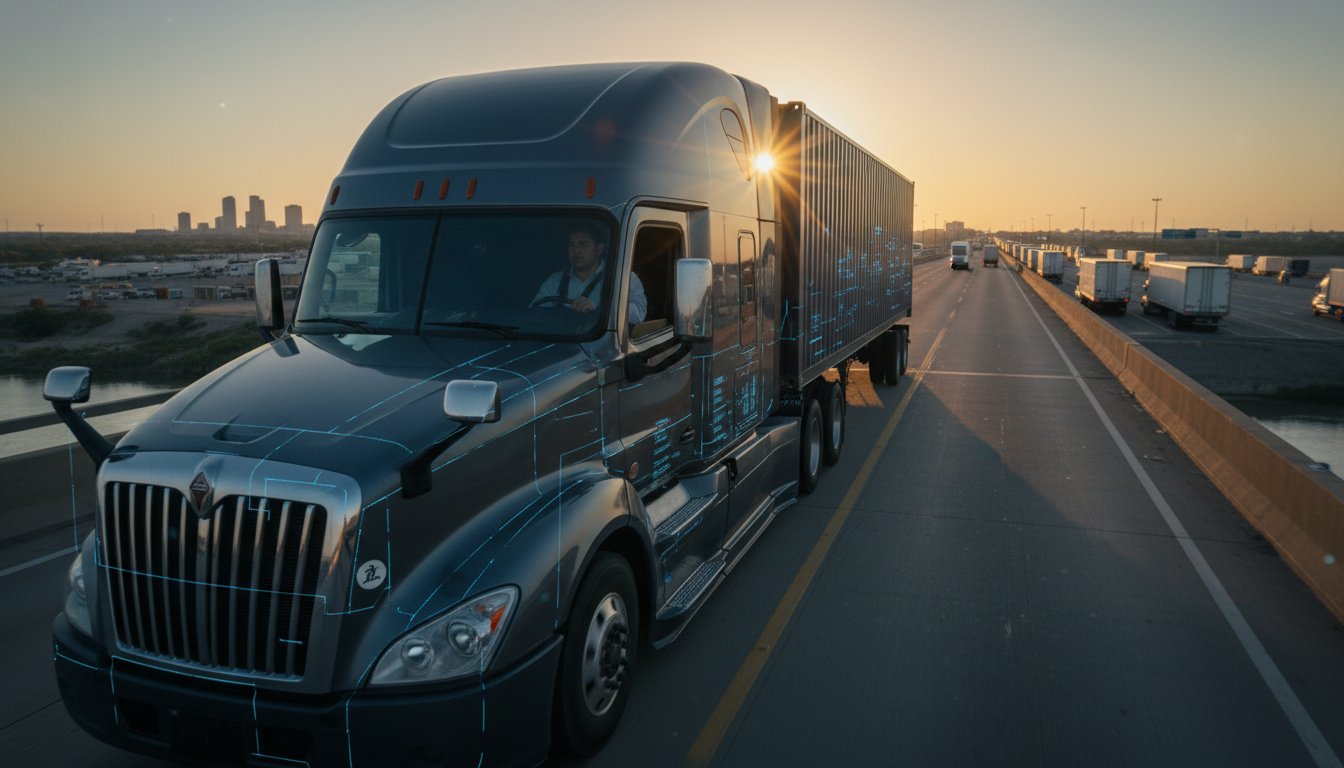
In the high-stakes environment of the World Trade Bridge, a standard policy isn't just insufficient; it's a technical risk that can halt your fleet at the border. Securing the right commercial trucking insurance Laredo requires more than just meeting the Texas Department of Motor Vehicles minimums. It demands a strategic approach to cross-border logistics and professional risk mitigation that accounts for Laredo's unique position as a primary global trade hub.
You likely feel the pressure of rising premiums driven by high-traffic border congestion and the confusion surrounding interstate versus intrastate filings. This guide will help you master the complexities of cargo and liability limits, ensuring your fleet remains compliant with both TxDMV and FMCSA standards. We'll examine the 2026 federal broker financial responsibility rules, clarify the $500,000 and $750,000 liability thresholds, and provide expert guidance on stabilizing your operational costs through precise coverage structures.
Laredo isn't just another Texas city; it's the most significant inland port in the United States, facilitating hundreds of billions of dollars in trade annually. For carriers operating here, commercial trucking insurance Laredo isn't a generic product but a specialized shield designed for border-zone operations. This coverage must encompass liability, cargo, and physical damage while specifically accounting for the high-intensity logistics of the international border. Standard Commercial vehicle insurance frameworks often fall short when they don't account for the nuances of drayage, where trailers are frequently swapped between Mexican and American power units.
To better understand this concept, watch this helpful video:
The congestion at the World Trade Bridge and the Colombia Solidarity Bridge creates a risk profile unlike any other region in Texas. Constant idling, tight maneuvering in port facilities, and the sheer density of heavy vehicles increase the frequency of low-speed collisions and physical damage claims. Once a load clears the port, it enters the I-35 corridor, a stretch of highway notorious for high-traffic volume and severe accident rates. Carriers must also navigate specific Border Zone requirements. These regulations dictate how Mexican carriers enter Laredo and what insurance filings are necessary to maintain legal compliance during those critical first miles on U.S. soil. This localized risk environment requires a policy that understands the difference between a regional delivery and a cross-border transfer.
Choosing an insurance partner requires more than a simple price comparison. AMCO.NET LLC has spent decades building relationships with A-rated carriers that understand the specific hazards of the South Texas trade artery. Local expertise is vital because national call center providers often don't grasp the complexities of TxDMV filings for drayage fleets. Just as we provide specialized Commercial Trucking Insurance in Houston for port-side operations there, our Laredo team focuses on the technical details that keep your authority active. We serve as consultants who analyze your CSA scores and ELD data to ensure your commercial trucking insurance Laredo reflects your actual safety performance rather than just a regional average.
Building a resilient risk management framework begins with understanding the specific mandates for commercial trucking insurance Laredo. While the FMCSA insurance requirements set the legal floor at $750,000 for interstate carriers of non-hazardous materials, this minimum rarely satisfies the contractual demands of modern brokers and shippers. In the Laredo market, a $1,000,000 primary auto liability limit has become the de facto standard. This coverage protects your business against third-party bodily injury and property damage claims, which are statistically more frequent in high-traffic border zones where heavy-duty equipment and passenger vehicles share tight corridors.
Beyond liability, protecting the tractor and trailer is a capital priority. Physical damage coverage secures your equipment against collision, fire, and the heightened theft risks associated with border staging areas. When structuring this policy, carriers must choose between Actual Cash Value (ACV) and Stated Amount. ACV pays based on current market value at the time of loss, while Stated Amount allows you to declare a specific value for specialized equipment. For many Laredo fleets, balancing these valuations with a higher deductible can lead to more predictable monthly costs without sacrificing the core security of the asset.
Laredo serves as a gateway for high-value electronics, automotive parts, and perishables. Standard cargo policies often contain exclusions for specific commodities or unattended vehicles that can leave a carrier exposed. It's vital to ensure your policy includes Interchange and Non-Owned trailer coverage, especially if your operation involves frequent trailer swaps. For those hauling fresh produce, refrigeration breakdown endorsements are non-negotiable. Without this specific addition, a simple mechanical failure in the cooling unit could result in a total loss of the shipment that your base policy won't cover. Evaluating these technical details with a specialist helps ensure your commercial trucking insurance aligns with your specific operational profile.
Finally, owner-operators must consider Non-Trucking Liability, often called Bobtail insurance. This covers the tractor when it's being operated for personal use or while not under dispatch. In a city like Laredo, where drivers often move between yards and staging areas without a trailer, this gap in coverage can be a significant legal liability. Maintaining a continuous chain of protection ensures that whether you're hauling a load or moving between assignments, your business remains insulated from financial shocks. Securing comprehensive commercial trucking insurance Laredo means closing these gaps before they become costly operational failures.
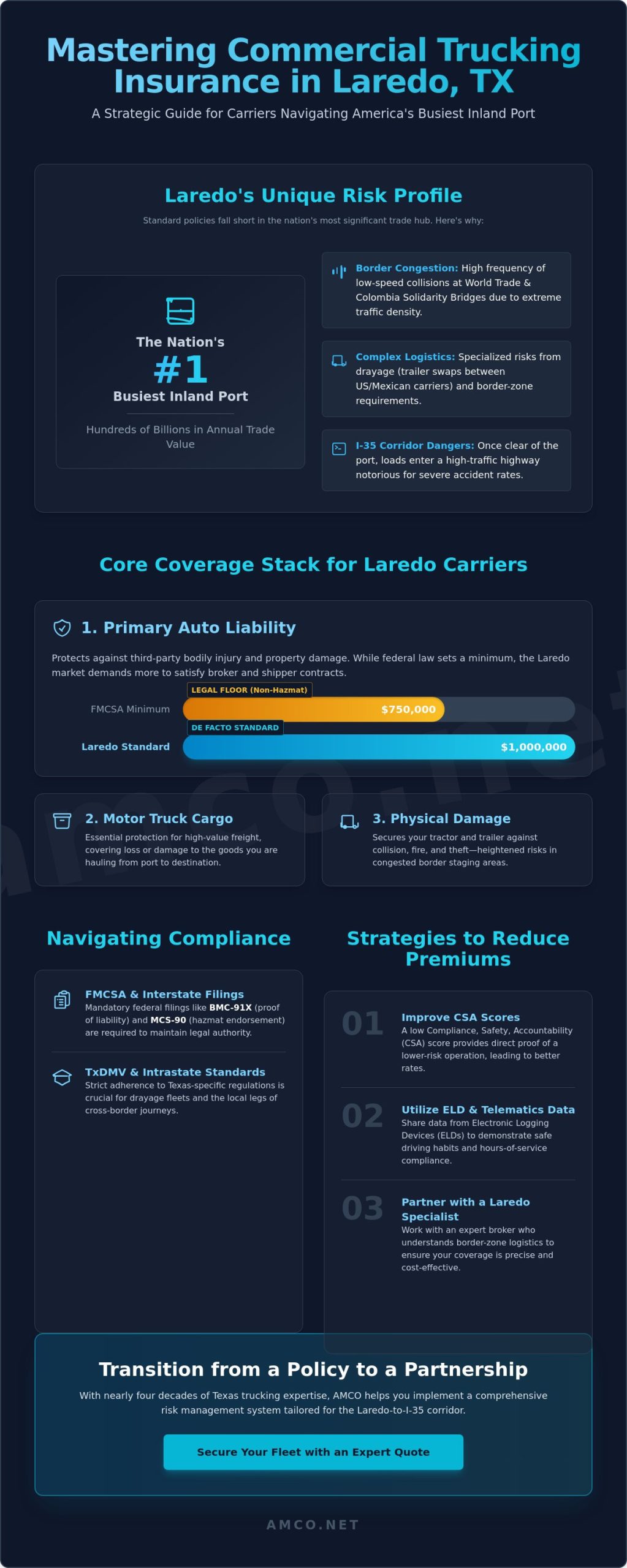
Operational stability for any carrier hinges on meticulous compliance with both federal and state regulations. In a logistics hub as complex as Laredo, the intersection of interstate trade and local drayage requires a precise understanding of mandatory filings. Failure to maintain these electronic records can result in immediate "Out of Service" orders, halting your fleet at the most critical point of the supply chain. Your commercial trucking insurance Laredo must be backed by the correct filings to prove to regulators that your business meets all financial responsibility mandates.
Carriers often struggle to distinguish between federal and state-level mandates. If your trucks stay within Texas borders, you are regulated by the Texas Department of Motor Vehicles (TxDMV) and require Form E and Form H filings. Form E confirms you meet the state’s $500,000 liability minimum, while Form H is the certification for cargo insurance. However, because Laredo is an international gateway, most cargo technically qualifies as interstate commerce. This means even if your truck never leaves Texas, the nature of the freight may trigger federal Unified Carrier Registration (UCR) requirements. Managing these timelines is critical; our team handles these filings systematically to prevent administrative lapses that could ground your trucks.
Launching a new trucking company in Laredo presents a unique set of challenges, particularly regarding insurability. Many national providers refuse to quote new authorities during their first 12 months due to a lack of safety data. To overcome this hurdle, new carriers should prioritize clean roadside inspections and maintain a disciplined safety culture from the first mile. Demonstrating a commitment to professional risk management makes your business more attractive to A-rated insurers. Partnering with a specialized Insurance Company Near Me allows you to leverage local market knowledge to secure coverage when others might see only risk. This proactive approach ensures your new venture has the stable foundation of commercial trucking insurance Laredo needed to grow in a competitive market.
Laredo’s status as a high-density trade corridor naturally drives base premiums higher than in rural districts. However, carriers shouldn't view these costs as fixed operational burdens. Strategic risk management allows savvy fleet managers to differentiate their operations from the regional average. By focusing on data transparency and safety protocols, you can transform your commercial trucking insurance Laredo from a mandated expense into a competitive advantage. Insurance underwriters in 2026 prioritize carriers that provide granular insights into their daily operations rather than those relying on outdated safety models.
Your Compliance, Safety, Accountability (CSA) scores serve as a primary indicator of your risk profile. High scores in categories like Unsafe Driving or HOS Compliance directly correlate with increased premiums. Leveraging Electronic Logging Device (ELD) data isn't just about regulatory adherence; it's a tool for safety-based discount structures. The "Laredo Factor" also plays a significant role in physical damage and cargo rates. Secure terminal parking and robust yard security in Laredo mitigate the high risk of theft and vandalism prevalent in border staging areas. Carriers that invest in fenced, monitored facilities often see more favorable terms during the underwriting process.
Underwriters increasingly value the objective truth provided by technology. Dashcam footage is an essential asset for Laredo fleets, especially when navigating the high-collision zones of I-35. It provides the necessary evidence to prove non-fault in accidents that might otherwise lead to costly settlements. Similarly, meticulous digital maintenance logs demonstrate that your fleet is less likely to suffer mechanical failures that lead to roadside hazards. Carriers that implement telematics-based safety programs see an average 15% reduction in premium costs within 24 months. This data-driven approach shifts the conversation from generic risk pools to your specific performance metrics.
The quality of your driver pool remains a significant variable in your insurance math. In Texas, there's a direct correlation between CDL experience and the affordability of your policy. Underwriters look for drivers with at least two years of verifiable experience and a clean Motor Vehicle Record (MVR). Strict hiring standards that exceed basic state requirements can lead to substantial long-term savings. While this guide focuses on commercial fleets, the same principles of risk assessment apply to all vehicle types, as seen in our guide to Car Insurance in Houston, TX: The 2026 Complete Driver’s Guide. Establishing a culture of safety across all company-owned vehicles is the most effective way to stabilize your insurance budget.
Review your current safety protocols to see where you can optimize your commercial trucking insurance and reduce your overhead.
Success in the South Texas logistics sector requires a partner that views insurance as a systemic component of your business operations rather than a mere administrative burden. Established in 1987, AMCO brings 39 years of specialized experience to the table, providing the stability and professional depth required to navigate the complexities of commercial trucking insurance Laredo. We don't simply facilitate transactions; we act as risk consultants who help you build a more resilient and profitable carrier. Our methodology focuses on long-term technological continuity and financial predictability, ensuring your fleet remains operational through shifting regulatory environments.
Modern dispatchers and fleet managers need real-time access to their documentation to keep freight moving. Our integrated online policy management system and mobile app provide Laredo-based teams with the ability to manage certificates of insurance and policy details from any location. This technological edge is critical for maintaining the pace required at the international border. Whether you're a seasoned owner-operator or a manager overseeing a large enterprise, our professional team delivers fast, data-driven quotes that reflect your actual risk profile. We prioritize professional distance and objective analysis to foster a relationship built on trust and technical competence.
Our position as an independent agency allows us to leverage relationships with multiple A-rated carriers, ensuring competitive bidding for your specific requirements. We understand the logistical nuances of the Laredo-Houston-Dallas trade triangle, a corridor that serves as the backbone of Texas commerce. This regional expertise allows us to provide tailored solutions that help carriers scale from a single unit to a full fleet. By integrating your commercial trucking insurance Laredo into a broader business strategy, we help you improve your production markers and operational efficiency. We've seen the market evolve since the 1980s, and we use that historical perspective to anticipate the challenges your business might face tomorrow.
To provide an accurate and professional quote, our team requires standard operational data, including your USDOT and MC numbers, a current driver list with MVRs, and your equipment schedule. We're committed to fast turnaround times, recognizing that in the Laredo logistics market, delays translate directly to lost revenue. For those operating across the state, our Comprehensive Guide to Insurance in Houston, TX offers additional insights into managing risks in other major Texas port cities. We invite you to experience a partnership based on professional transparency and decades of proven industry competence. Our goal is to provide the security you need to focus on the growth and stability of your transportation business.
Operating in the nation's busiest inland port requires more than just meeting minimum liability limits. Long-term success depends on a technical understanding of drayage risks, meticulous compliance with federal and state filings, and a proactive approach to driver safety data. By moving beyond basic coverage and embracing a comprehensive risk management system, you can stabilize your operational costs even in a high-traffic border environment.
Your choice of partner is the final component of this strategic framework. Since 1987, AMCO has provided the specialized expertise needed to navigate the Texas trucking landscape, offering access to A-rated carriers and deep knowledge of new authority compliance. We understand that commercial trucking insurance Laredo isn't just a regulatory checkbox; it's the foundation of your business’s financial continuity and professional reputation. Our consultative approach ensures that your insurance structure scales alongside your fleet.
Take the next step in optimizing your fleet's protection and profitability by securing a policy designed for the border. Request a Professional Commercial Trucking Insurance Quote for Your Laredo Fleet. We look forward to supporting your long-term growth and operational safety with a solution that matches your professional standards.
Texas trucking premiums typically range between $8,000 and $18,000 annually per truck according to data published in early 2026. Owner-operators often see higher rates, with some paying between $9,000 and over $20,000 per year. These figures fluctuate based on your fleet's safety history, driver experience, and the specific commodities you transport through the Laredo trade corridor.
For intrastate operations within Texas, the Department of Motor Vehicles requires a minimum of $500,000 in combined single limit liability. If you operate as an interstate carrier, the FMCSA mandates a minimum of $750,000 for non-hazardous freight. It's important to note that most modern brokers now contractually require a $1,000,000 limit to qualify for high-value loads.
Standard commercial trucking insurance Laredo policies generally do not provide liability coverage once a vehicle crosses into Mexico. Carriers must obtain separate Mexican liability insurance from a provider licensed to operate within that jurisdiction. Most U.S. policies only extend physical damage coverage for the tractor and trailer within a limited radius of the international border.
Bobtail insurance provides liability protection specifically when a tractor is operated without a trailer attached, regardless of whether the driver is under dispatch. Non-Trucking Liability is more restrictive; it only covers the driver for personal, non-business use of the truck while not under dispatch. Choosing the wrong one can leave a carrier exposed during critical transit gaps.
Maintaining clean roadside inspections and improving your CSA scores are the most effective ways to reduce costs. Implementing telematics and sharing ELD data with underwriters can also lead to significant discounts based on actual driving behavior. Additionally, providing proof of secure terminal parking in Laredo helps lower physical damage rates by reducing the local risk of theft.
The most frequent filings include the BMC-91X for federal liability proof and Form E for Texas intrastate compliance. Carriers hauling household goods also require Form H for cargo certification. If your fleet transports hazardous materials, the MCS-90 endorsement is a mandatory federal requirement to demonstrate financial responsibility to the public in the event of an accident.
Yes, AMCO has focused on helping new trucking authorities establish their insurance foundations since 1987. We understand that the first 12 months are the most challenging for securing competitive commercial trucking insurance Laredo. Our team assists with all necessary state and federal filings while providing professional guidance to help new carriers improve their risk profile and long-term insurability.
Most professional carriers hauling freight along the I-35 corridor maintain cargo limits between $100,000 and $250,000 per load. While federal minimums for certain goods are lower, shippers of electronics or automotive parts frequently demand much higher protection. You should always align your cargo coverage with the maximum replacement value of the freight you transport to ensure full financial protection.