

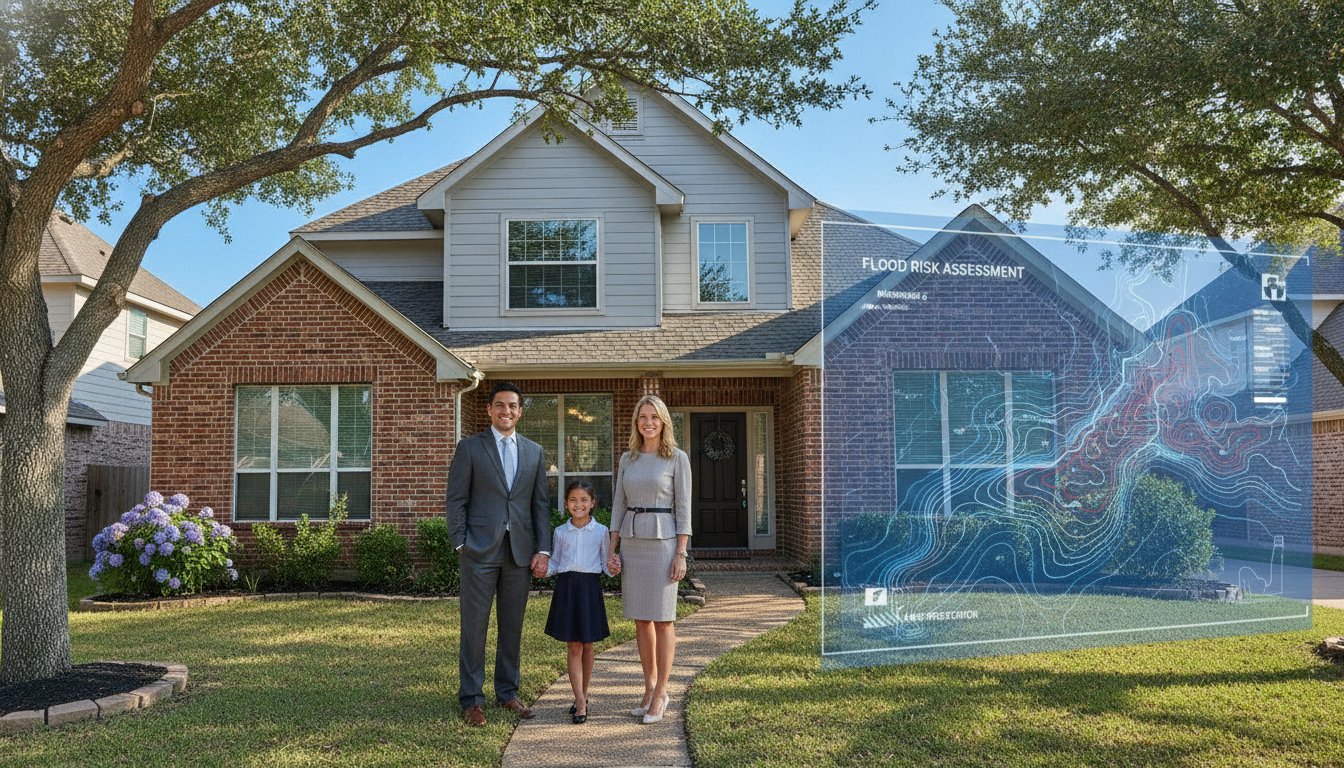
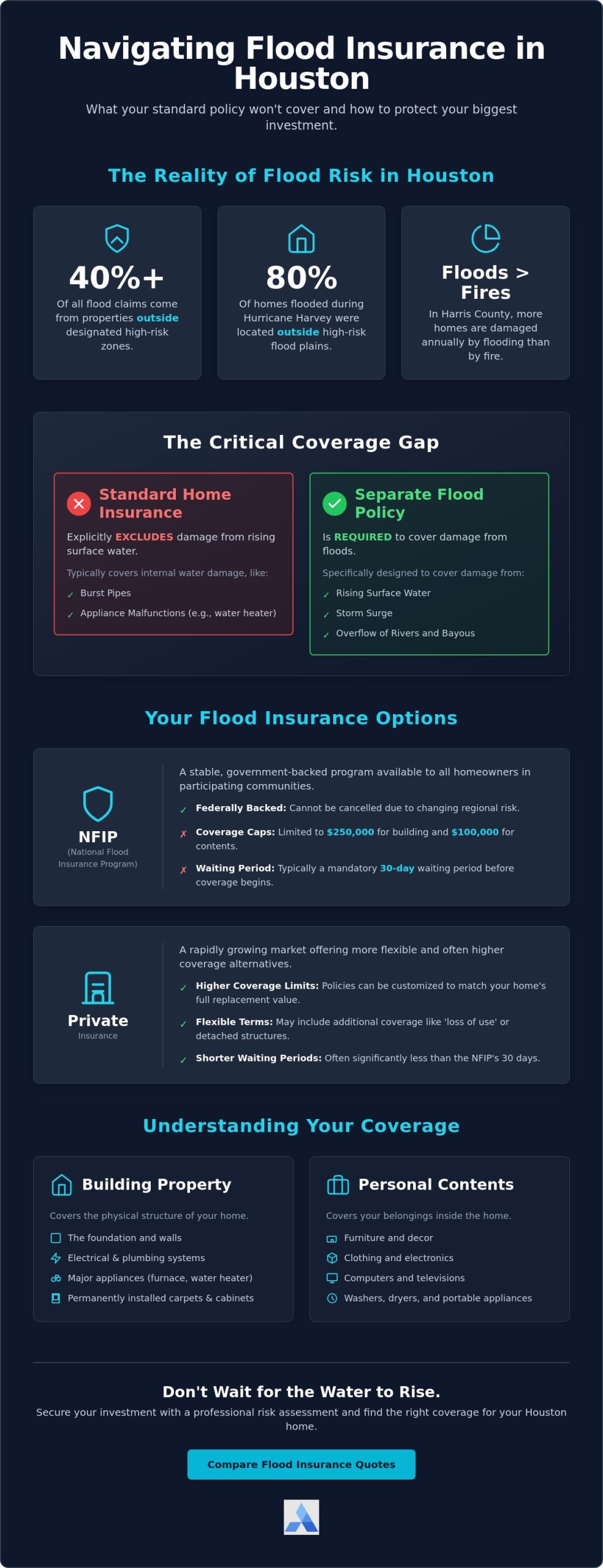
Did you know that more than 40% of flood insurance claims originate from properties located outside of designated high-risk zones? For many residents seeking homeowners insurance quotes Houston providers offer, there's a dangerous assumption that a standard policy covers rising water. It doesn't. In Harris County, more homes are damaged annually by flooding than by fire; however, the distinction between general property protection and flood indemnity remains a significant source of confusion for many.
It's understandable to feel a sense of urgency when reviewing FEMA maps or reflecting on the catastrophic losses seen in previous years. You likely want a precise, data-driven strategy to secure your investment without overpaying for redundant coverage. This guide provides a professional analysis of the 2026 flood insurance landscape, comparing NFIP policies with the expanding private market. We'll examine current coverage limits, the impact of Risk Rating 2.0 on your premiums, and the critical steps required to obtain a local quote before the mandatory 30-day waiting period begins.
Houston's topography presents a unique set of challenges for property owners. The city's vast, flat landscape and intricate bayou systems mean that heavy rainfall doesn't just drain away; it accumulates. Flood insurance is specifically designed as a separate policy to cover damage resulting from rising surface water, a peril that homeowners insurance in Texas explicitly excludes. When evaluating homeowners insurance quotes Houston residents often overlook the necessity of this additional layer of protection until an event is imminent.
Historical data from Hurricane Harvey revealed a sobering reality: approximately 80% of the homes that flooded were located outside of designated high-risk flood zones. This statistic underscores the fact that in the Bayou City, risk isn't confined to a specific map color. Every property has some level of exposure due to the "flash flood" nature of our local weather patterns and the speed at which drainage systems can reach capacity.
To better understand how flood coverage integrates with your overall property protection, watch this helpful overview:
The legal distinction between water damage and a flood is often the difference between a successful claim and a total loss. Standard policies typically cover "sudden and accidental" internal water discharge, such as a burst pipe or a failing water heater. However, as soon as water touches the ground before entering your home, it's classified as a flood. This "rising water" rule is a standard industry exclusion across the United States.
Our region's history is defined by its relationship with water. Events like Tropical Storm Allison and Hurricane Harvey changed how we view urban drainage and risk management. While the Harris County Flood Control District works to improve infrastructure through bayou widening and detention basins, these systems have physical limits. They cannot prevent every instance of localized street flooding or structural inundation during extreme rainfall events.
The National Flood Insurance Program (NFIP) remains the primary vehicle for protection, but understanding your specific risk is key. Living in "Zone X" might satisfy your mortgage lender's requirements, but it doesn't provide immunity. In the 713 and 832 area codes, "low risk" simply means the flood hasn't happened yet. Professional risk management requires looking beyond the minimum requirements to ensure your asset is truly protected for the long term.
Choosing the right flood policy requires a precise understanding of your property's replacement cost and your specific risk appetite. While gathering homeowners insurance quotes Houston property owners should recognize that most standard carriers function as intermediaries for the National Flood Insurance Program (NFIP). However, the private flood insurance market has expanded at a 20% annual growth rate since 2020, offering a sophisticated alternative to the federal standard. This choice isn't just about price; it's about matching coverage limits to your home's actual value.
The NFIP remains the bedrock of flood protection in the United States. Its primary advantage is stability, as it's backed by the federal government and cannot "cancel" your coverage due to regional risk changes. You can find detailed technical specifications through official FEMA flood insurance information resources. Despite this reliability, the program has rigid constraints. Building coverage is capped at $250,000 for single-family homes, and personal contents are limited to $100,000.
Another critical factor is the timeline. Most NFIP policies require a 30-day waiting period before they become effective. If you wait until a tropical system enters the Gulf of Mexico, it's often too late to secure protection. For homes in high-value neighborhoods, these federal caps often fall short of the actual reconstruction costs, creating a significant "protection gap" that homeowners must fund out of pocket.
Private insurers have introduced much-needed flexibility into the Houston market. These policies are particularly effective for homes that exceed the $250,000 federal building cap. Private carriers often provide replacement cost coverage for personal belongings, whereas the NFIP typically uses actual cash value, which accounts for depreciation. Additionally, private policies can include "loss of use" coverage, which pays for temporary housing if your home becomes uninhabitable after a flood event.
The administrative process is also more agile. Waiting periods in the private market are frequently shorter, often ranging from 10 to 14 days. Some carriers even offer endorsements for pool repair or basement contents, which the federal program excludes. When you request homeowners insurance quotes Houston agents offer, it's vital to ask for a side-by-side comparison of private vs. NFIP options. This ensures your coverage aligns with your financial goals. If you're ready to analyze your specific risk, you can receive a professional coverage assessment to determine which market fits your needs.
FEMA Flood Insurance Rate Maps (FIRMs) historically served as the primary tool for determining mandatory insurance requirements. In 2026, these maps remain essential for mortgage compliance, particularly in High-Risk Zones designated by the letters A or V. Properties in these areas face a mandatory purchase requirement for federally backed loans. However, homeowners in Moderate-to-Low Risk Zones, such as B, C, and X, shouldn't ignore coverage. Statistics from FEMA indicate that more than 40% of flood insurance claims originate from these supposedly safe areas, where insurance is optional but highly recommended.
The implementation of Risk Rating 2.0 has fundamentally changed how Harris County Flood Maps interact with your premium. Rather than relying solely on your zone, FEMA now evaluates individual property characteristics. These include the home's first-floor elevation, its distance to a flood source, and the specific replacement cost of the structure. While your zone might dictate whether your bank requires a policy, these granular data points determine the actual cost when you request homeowners insurance quotes Houston providers generate. Under this system, premiums for existing policies can increase by up to 18% annually until they reach their full-risk rate.
The term 100-year floodplain is one of the most misunderstood concepts in property management. It doesn't mean a flood occurs once every century. Instead, it refers to a 1% annual chance of flooding. Over the course of a 30-year mortgage, a home in this area has a 26% chance of experiencing a flood event. Recent map revisions in Houston suburbs have moved thousands of properties into this category. To mitigate rising costs, many owners utilize Elevation Certificates. This document provides precise data on your home's height relative to the Base Flood Elevation, which can lead to significant premium adjustments under the current risk-based system.
Living near major tributaries like Buffalo Bayou or Cypress Creek introduces specific hydraulic risks that generalized maps might not fully capture. Older Houston neighborhoods often rely on drainage infrastructure designed for a different climate reality. This legacy system's capacity directly impacts your property's resilience during intense rainfall. We recommend using local educational mapping tools to visualize how water moves through your specific neighborhood. Understanding these local nuances allows you to better evaluate homeowners insurance quotes Houston agents provide, ensuring you aren't just meeting a mortgage requirement but actually protecting your equity.
A flood insurance policy isn't a universal safety net; it's a precisely defined contract with two primary components. When you evaluate homeowners insurance quotes Houston providers offer, you must distinguish between building property and personal contents coverage. Each serves a different purpose in your recovery strategy. FEMA data indicates that just one inch of water can result in over $25,000 in structural damage. Understanding these limits prevents financial surprises during the claims process.
It's vital to recognize the difference between Replacement Cost Value (RCV) and Actual Cash Value (ACV). For a primary residence, the building coverage typically pays out on an RCV basis, meaning it covers the cost to rebuild without deducting for depreciation. However, personal belongings are almost always settled at ACV. This means the insurer pays what the item was worth at the time of the loss, not what it costs to buy a new version today. Awareness of this gap allows you to plan your emergency savings more effectively.
Building property coverage focuses on the "bones" of your home and its vital infrastructure. This includes your foundation, electrical systems, and plumbing. It also covers major climate control units like furnaces and water heaters. Permanent installations such as built-in cabinetry, walk-in closets, and flooring are part of this category. If a flood occurs, this portion of your policy also assists with debris removal. The costs associated with "mucking out" a home; removing water-logged drywall and insulation; are significant and fall under this structural protection.
Personal contents coverage is a separate limit that protects the items inside your home. This includes furniture, electronics, clothing, and portable appliances like your microwave or washer and dryer. You should maintain a digital home inventory to streamline the claims process, as you'll need to prove the existence and condition of these items. There are strict sub-limits for high-value items like jewelry, furs, or original artwork. Electronic data and stock certificates are generally excluded from coverage entirely.
Property owners often forget that vehicles are not protected by flood insurance. To protect your car from rising water, you must maintain comprehensive car insurance in Houston. Additionally, flood policies do not cover "land" or exterior features like landscaping, fences, septic systems, or currency. Because these exclusions are standard, you should get a detailed coverage breakdown from a professional advisor to identify any remaining vulnerabilities in your portfolio.
Comparing homeowners insurance quotes Houston agents provide requires a methodical approach to risk management. Independent agencies offer a significant advantage over captive carriers because they access multiple insurance markets simultaneously. This is particularly crucial for flood protection, where the choice between a federal NFIP policy and a private alternative can change based on a single street address or a home's foundation type. By working with a broker who understands these nuances, you ensure your coverage isn't just a generic product but a tailored solution for your specific property.
To receive an accurate assessment, you'll need to organize specific documentation. This includes your property's claims history and technical construction details, such as the elevation of your first floor and the presence of flood vents. These factors are central to how insurers calculate risk under current guidelines. Bundling your flood policy with comprehensive insurance in Houston often leads to more favorable rates and simplifies your administrative burden during a claim. Timing is also a critical factor; because of the mandatory 30-day waiting period for most federal policies, you shouldn't wait for a storm to appear on the radar before initiating your search.
Protecting your home's equity begins with a thorough review of your current coverage. Many residents discover dangerous gaps in their protection only after a storm has already reached the Gulf of Mexico. When you contact our brokers to start the quoting process, have your current homeowners declarations page ready. This allows us to identify where your existing policy leaves you vulnerable to rising water. We'll help you navigate the complexities of FEMA maps and private market options to secure a policy that fits your budget and your home's value. Protect your Houston home—get a fast flood insurance quote from AMCO today.
Navigating the 2026 flood insurance market requires more than just meeting a lender's minimum requirements. It demands a clear understanding of the "rising water" rule and a strategic choice between federal NFIP stability and the higher coverage limits found in private markets. As Risk Rating 2.0 continues to refine premiums based on individual property data, staying informed about your specific Harris County risk zone is the only way to avoid significant financial exposure. Relying on a standard policy alone leaves your most valuable asset vulnerable to the unique geography of the Bayou City.
Since 1987, AMCO has provided professional guidance to local families, offering a deep understanding of the drainage challenges within our region. We provide access to both the National Flood Insurance Program and competitive private markets to ensure your structure and contents are fully protected. When you're ready to request homeowners insurance quotes Houston property owners rely on, our local experts are here to bridge the gap between basic coverage and comprehensive indemnity. Get a Fast & Affordable Flood Insurance Quote for Your Houston Home today and gain the peace of mind that comes with professional risk management.
Flood insurance isn't universally mandated by law for every property. However, if you have a federally backed mortgage and your home is located in a high-risk flood zone, such as Zone A or V, your lender will require a policy. Even without a mandate, it's a critical investment since 40% of flood claims in our region originate from properties in low-to-moderate risk areas.
Premiums are now determined by FEMA's Risk Rating 2.0 system, which evaluates individual property characteristics rather than just map zones. According to a 2026 analysis, the median NFIP premium in Houston was $1,574 per year. Properties in lower-risk Zone X saw a median of $1,379, while those in higher-risk Zone AE averaged $2,338 annually based on their specific elevation and proximity to water.
Standard property policies explicitly exclude damage caused by rising surface water. While your primary policy covers internal issues like burst pipes, it won't pay for remediation after a bayou overflows or heavy rain inundates your street. This distinction is a frequent point of confusion when residents evaluate homeowners insurance quotes Houston agents provide for their primary coverage.
The 30-day waiting period is a federal requirement for most NFIP policies to prevent homeowners from purchasing coverage only when a storm is imminent. The policy doesn't become active until 30 days after the application and premium payment are processed. Private flood insurance providers often offer shorter waiting periods, sometimes ranging from 10 to 14 days, providing more flexibility during hurricane season.
Coverage for mold is conditional. It's generally covered only if the mold is a direct result of a flood event and the homeowner took reasonable, documented steps to mitigate damage after the water receded. It doesn't cover mold resulting from ongoing seepage, high humidity, or a failure to properly dry the structure following an event.
Yes, you can secure coverage regardless of your proximity to a bayou as long as your community participates in the NFIP. For homes near Buffalo Bayou or Cypress Creek, insurance is often a mortgage requirement. In these high-exposure areas, comparing homeowners insurance quotes Houston providers offer for both NFIP and private market alternatives is the best way to find adequate coverage limits.
Building coverage protects the physical structure of your home and its essential systems, including the foundation, HVAC, and plumbing. Contents coverage is a separate limit that protects your personal belongings like furniture, clothing, and electronics. The NFIP caps these at $250,000 for the structure and $100,000 for belongings, though private policies can provide much higher limits.
You can determine your specific risk level by using the Harris County Flood Education Mapping Tool or the FEMA Flood Map Service Center. These platforms provide official Flood Insurance Rate Maps (FIRMs) that lenders use to determine insurance requirements. Understanding your zone is the first step in building a professional risk management strategy for your property.