Your hot shot rig is a specialized tool designed for speed and precision, but without the right hot shot trucking insurance, it's a liability that won't leave the yard. Many Texas owner-operators view insurance as a static expense, yet in 2026, it's the primary gatekeeper to the high-paying urgent freight market. If your policy doesn't meet specific broker standards, you're locked out of the most profitable contracts before you even start your engine.
We understand that the path to a new authority is often blocked by high premiums and the confusion of balancing TXDOT and USDOT filings. It's frustrating to find that many carriers won't touch non-CDL operations, leaving you with limited, expensive options. This guide provides a clear framework for mastering these technical complexities. You'll learn how to secure policies that satisfy strict broker requirements, utilize safety tech to drive down costs, and handle MCS-90 or BMC-32 filings with the efficiency of a seasoned professional. We'll examine the current Texas landscape to ensure your business remains both compliant and competitive.
Hot shot trucking insurance represents a specialized segment of the commercial insurance market, tailored for owner-operators who deliver expedited freight using medium-duty trucks. This coverage differs fundamentally from standard commercial auto policies because it accounts for the unique operational demands of for-hire transportation. To grasp the full scope of this sector, one can examine What is Hot Shot Trucking? to see how these operators bridge the gap between local couriers and massive freight carriers. It's a high-stakes environment where the equipment is smaller, but the responsibility is equal to that of a full-size semi.
Insurers view this niche through a lens of heightened risk due to the "urgent" nature of the cargo. When a rig is carrying mission-critical parts to an oil rig or a construction site, the pressure to meet deadlines increases, which can impact safety variables. Professional hot shot trucking insurance serves as the mandatory bridge between pickup truck operation and federal motor carrier compliance. It transforms a personal or light-commercial vehicle into a recognized freight-hauling asset that meets the rigorous standards of the FMCSA.
To better understand this concept, watch this helpful video:
Most professional hot shotters utilize Class 3, 4, or 5 trucks, specifically dually models like the RAM 3500, Ford F-350, or GMC Sierra 3500. These rigs are almost always paired with gooseneck trailers, which provide the stability needed for heavy payloads. However, these trailers must be specifically scheduled on your policy to ensure coverage. The Gross Vehicle Weight Rating (GVWR) is the primary metric insurers use to determine your premium tier. Once your combined weight exceeds 10,001 pounds, the complexity of your filing requirements increases significantly, moving you into a higher bracket of regulatory oversight.
While "expedited" is a broad term, hot shotting carries a specific for-hire legal status that demands specialized protection. Brokers typically require higher liability limits for hot shot operators than they might for a local delivery van because the cargo often consists of expensive industrial equipment. This isn't just about meeting a legal minimum; it's about being "bookable" in a competitive market. A policy must provide 24/7 coverage for time-sensitive deliveries, ensuring that your authority remains valid even during the most demanding transit schedules. This distinction between private carriage and for-hire service is what defines your insurance needs.
Primary Auto Liability is the non-negotiable foundation of any professional operation. While federal minimums might be lower for certain vehicle weights, the $1 million limit is the industry benchmark for broker compliance. Brokers simply won't grant access to high-value freight without it. Referencing the Federal Insurance Filing Requirements is vital to ensure your authority remains active and compliant with interstate regulations. In Texas, where highway traffic density is high, Uninsured and Underinsured Motorist coverage provides a necessary safety net against third-party negligence on busy corridors like I-10 or I-35.
Physical Damage coverage protects your specific investment from total loss. Since a Class 3 or 4 rig paired with a gooseneck trailer represents your primary revenue-generating asset, this policy covers collision, theft, or vandalism. It's often priced based on the stated value of your equipment, so it's wise to keep your appraisals current to avoid being underinsured. Without this protection, a single accident could permanently sideline your business.
Motor Truck Cargo is the actual deal-breaker for most load board contracts. While $100,000 is the common threshold, many expedited loads require much higher limits. You must verify exclusions for target commodities such as electronics, firearms, or high-end apparel, which are often omitted from standard forms. A BMC-32 filing acts as a legal guarantee to the shipping public that cargo losses will be handled, even if the policy has specific internal exclusions that might otherwise deny a claim. High-value hot shot trucking insurance must be precise to avoid these coverage gaps.
There is a critical distinction between hauling your own trailer and pulling someone else's equipment. Trailer Interchange coverage applies when you have a written contract to swap trailers with another carrier. Conversely, Non-Owned Trailer coverage protects you when hauling a shipper's trailer without a formal interchange agreement. This is particularly relevant at logistics hubs like the Port of Houston, where switching equipment is a daily occurrence. Relying on the wrong form can lead to a total claim denial if the trailer is damaged while in your possession.
Many hot shotters use their dually as a personal vehicle when they aren't under dispatch. Non-Trucking Liability, or Bobtail insurance, covers you when the truck is used for personal errands without a trailer attached. It's a key component of Commercial Trucking Insurance in Houston, where drivers often commute between jobs or use their trucks for daily tasks. If you're unsure which layer fits your specific route, you can consult with an agent to build a custom coverage stack that protects your business and your personal assets.
Operating a successful expedited freight business requires a clear understanding of your fixed and variable expenses. For most owner-operators, insurance is the second-highest operating cost after fuel. This financial reality makes the selection of a policy a critical business decision rather than a mere administrative task. In 2026, the market for hot shot trucking insurance is increasingly data-driven, with premiums reflecting real-time operational risks and historical performance metrics recorded by modern rig systems.
The radius of operation remains a primary pricing lever. Carriers categorize risks based on whether you operate locally, regionally, or with unlimited authority. While local routes in areas like Austin or Bryan might offer lower premiums, they significantly restrict your ability to secure high-paying loads from national brokers who demand flexibility. Additionally, insurers now heavily weigh Electronic Logging Device (ELD) data when calculating rates. Consistent hard braking, speeding events, and hours-of-service violations recorded by your telematics system can lead to immediate premium adjustments during renewal periods, as insurers reward consistent safety protocols.
New ventures face a significant pricing surge during their first 12 to 24 months of operation. Many national carriers refuse to quote businesses without at least two years of active authority or CDL experience, viewing them as high-risk entities. Research indicates that new carriers can expect to pay 25% to 50% more for coverage than established operations with clean records. To mitigate these initial costs, we often recommend maintaining a pristine Motor Vehicle Record (MVR) and considering higher deductibles to lower the monthly premium. AMCO.NET LLC leverages its position as an independent broker to identify carriers that specialize in growth-stage companies. This allows new authorities to secure necessary hot shot trucking insurance without overextending their initial capital.
Hauling within the "Texas Triangle", the region connecting Houston, Dallas, and San Antonio, presents unique challenges that insurers account for in their risk models. The high traffic density in these metropolitan corridors increases the statistical likelihood of collision claims. Similarly, operations near border hubs like Laredo or industrial centers in Midland and Odessa often trigger higher premiums due to increased risks of cargo theft and specialized liability concerns. Environmental factors also play a role in the Texas market. Vehicles frequently operating in Conroe or along the Gulf Coast may see higher physical damage costs to account for the risk of hurricanes and flash flooding, which can impact comprehensive coverage rates for the entire fleet.
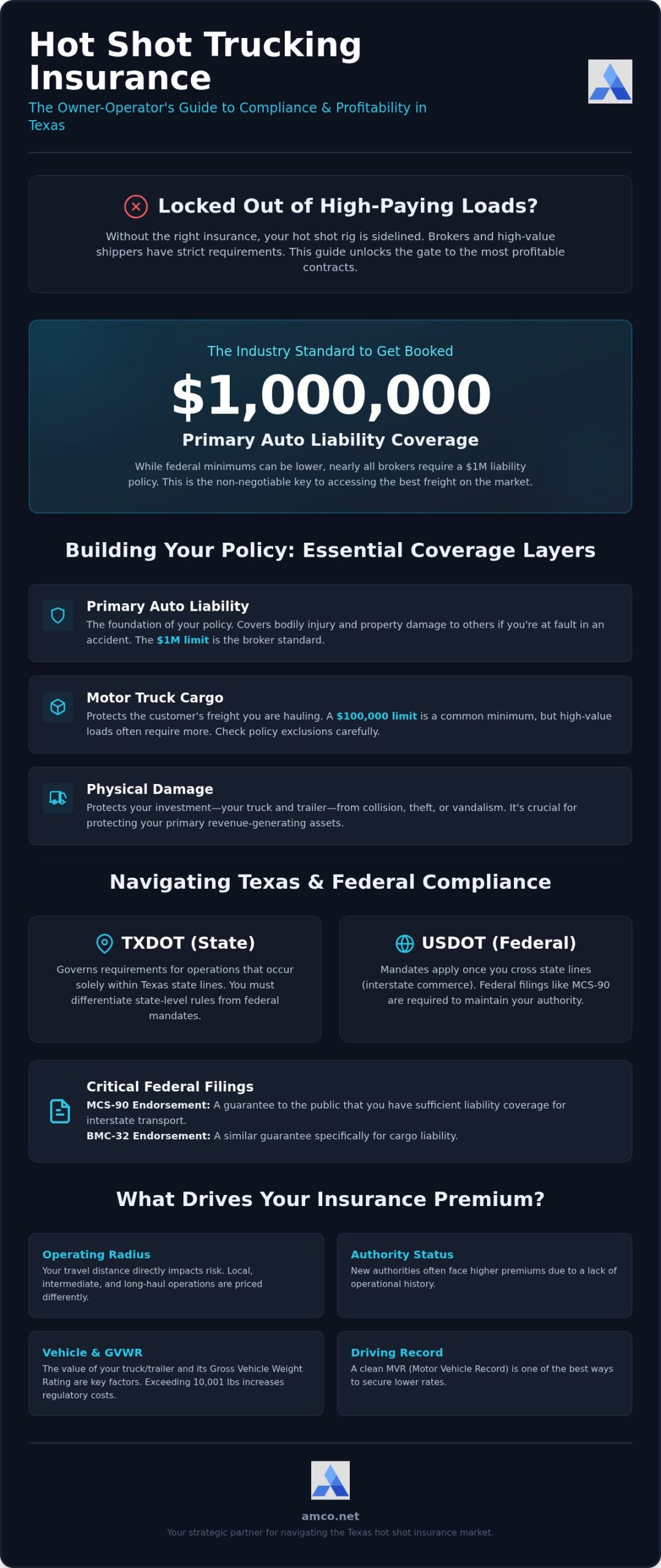
Compliance in the Texas market requires a precise understanding of where your authority ends and federal oversight begins. For owner-operators moving freight through the Laredo border or Dallas logistics hubs, the first step is determining your operational scope. If you remain strictly within state lines, you operate under TXDOT authority and must maintain a Form E filing. However, the moment you cross into another state or pick up cargo at the Port of Houston that originated internationally, you enter interstate commerce. This transition necessitates USDOT and MC numbers, along with a Unified Carrier Registration (UCR) for 2026 compliance.
The MCS-90 endorsement is a critical component of hot shot trucking insurance for interstate carriers. It serves as a federal guarantee that your liability coverage is valid and will protect the public in the event of an accident, regardless of specific policy exclusions. While it is not a substitute for standard liability, it is the primary document brokers and DOT officers look for during audits. Failing to have this endorsement properly attached to your policy can result in immediate out-of-service orders and significant fines.
The 26,001 lb Gross Vehicle Weight Rating (GVWR) is the definitive threshold for hot shot combinations. If the combined GVWR of your truck and trailer exceeds this number, the driver must possess a Commercial Driver's License (CDL). Operating as a non-CDL carrier is common in the hot shot sector, but it carries specific insurance implications. Many insurers view non-CDL operations as higher risk, which can limit the types of high-value loads you are legally allowed to insure. It's essential to match your equipment's weight ratings with your licensing to avoid coverage denials during a claim.
Navigating these filings without expert guidance often leads to delays in authority activation. You can contact our team today to ensure your filings are handled correctly the first time, keeping your rig on the road and profitable.
AMCO.NET LLC has served the Texas market since 1987, providing a level of continuity that is rare in the volatile commercial transport sector. As a Houston-based agency, we maintain a deep operational understanding of the Laredo-to-Dallas corridor, which is the lifeblood of many expedited operations. Our longevity allows us to anticipate shifts in carrier appetites, ensuring that our clients aren't left without options when market conditions tighten. We don't just sell policies; we provide the architectural support necessary for a sustainable trucking business through technical expertise and market stability.
Our independent brokerage model is specifically designed to benefit those seeking hot shot trucking insurance. Unlike captive agents who are limited to a single provider's underwriting criteria, we shop multiple carriers simultaneously. This approach is vital for new authorities and non-CDL operators who frequently encounter rigid eligibility requirements from national brands. By comparing diverse risk profiles across our network, we identify the most competitive rates and coverage structures tailored to your specific equipment and radius of operation. This ensures your business remains lean while maintaining the high limits required by major freight brokers.
In the expedited freight world, time is the primary currency. We've refined our intake process to ensure that new authorities can move from application to active filing as quickly as possible. This efficiency is supported by our commitment to technological continuity, including online policy management and a mobile app designed for drivers who are constantly on the move. When you are searching for an Insurance Company Near Me, you deserve a partner that matches your operational speed and provides localized expertise that national call centers cannot replicate.
Our role extends beyond the initial binding of a policy. We act as a consultant for our clients, assisting with the preparation for safety audits and ensuring that compliance documentation is always in order. We also take the proactive step of reviewing broker contracts. This ensures your cargo limits and liability layers are sufficient for the high-value loads you intend to haul, preventing costly coverage gaps before they occur. We view every owner-operator as a business partner whose growth is tied to our professional support. You can Get your specialized hot shot trucking insurance quote today and secure the expert guidance your new authority needs to remain profitable and compliant in the long term.
Success in the Texas expedited freight sector requires more than just a reliable rig; it demands a sophisticated approach to risk management and regulatory compliance. We've established that the right hot shot trucking insurance acts as a strategic asset for market access, enabling you to meet the strict liability standards required by the nation's top brokers. By mastering the nuances of federal filings and aligning your coverage with your specific operational radius, you protect your capital from the inherent volatility of the first two years of authority.
Since 1987, AMCO has provided Texas truckers with the localized expertise needed to maintain seamless operations across the state. Our independent model grants you access to top-rated commercial carriers, ensuring your policy remains competitive as your business scales. We handle the technical complexities of state and federal filings so you can focus on the road ahead. It's time to transition from a new authority to a preferred carrier. Get a Professional Hot Shot Insurance Quote from AMCO and secure a partner dedicated to your long-term profitability.
You only need a Commercial Driver's License (CDL) if the Gross Vehicle Weight Rating (GVWR) of your truck and trailer combination exceeds 26,001 pounds. Many owner-operators choose to stay below this weight limit to avoid the additional regulatory requirements of a CDL. However, staying under 26,000 pounds reduces your payload capacity, which can limit the types of freight you can legally haul under your hot shot trucking insurance policy.
The standard industry requirement for most brokers and load boards is $100,000 in Motor Truck Cargo insurance. While federal law doesn't mandate this specific amount for all cargo types, brokers use it as a baseline to ensure they're protected against high-value losses. If you plan to haul specialized industrial equipment or electronics, you may find that some contracts require limits of $250,000 or higher to remain compliant with their risk management standards.
A TXDOT number is required for carriers operating strictly within the borders of Texas, which is known as intrastate commerce. A USDOT number is mandatory if you cross state lines or transport cargo that originated outside of Texas. Even if you never leave the state, picking up international freight from the Port of Houston often triggers federal interstate requirements, necessitating a USDOT number and the corresponding federal insurance filings.
Yes, it's possible to secure coverage, although new authorities often face premiums that are 25% to 50% higher than established carriers. Many national insurers require two years of active authority before they'll offer a quote. AMCO specializes in helping growth-stage businesses navigate this "New Authority" hurdle by connecting them with carriers that specifically cater to new ventures. Maintaining a clean driving record is the most effective way to secure hot shot trucking insurance during your first year.
Standard policies only cover trailers that are specifically scheduled on the policy, but you can add Non-Owned Trailer or Trailer Interchange coverage to fill this gap. Non-Owned coverage protects a trailer while it's in your possession, such as when hauling for a specific shipper. Trailer Interchange is necessary if you have a written agreement to swap equipment with another carrier. Without these endorsements, damage to a trailer you don't own is typically excluded from coverage.
New drivers can lower their costs by opting for a higher deductible and installing safety technology like dash cams and telematics. Insurers often provide discounts to operators who share their Electronic Logging Device (ELD) data to prove safe driving habits. Additionally, limiting your radius of operation to 500 miles or less can significantly reduce your rates compared to unlimited, over-the-road authority. Shopping the market through an independent broker ensures you see the most competitive options available.
The MCS-90 is a mandatory federal endorsement for all interstate for-hire motor carriers. It serves as a financial guarantee to the public that your insurance company will pay for liability claims, even if your policy has specific internal exclusions. It's a critical document for federal compliance; without it, the FMCSA will not activate your interstate authority. This endorsement ensures that you meet the minimum financial responsibility requirements of $750,000 for non-hazardous freight.