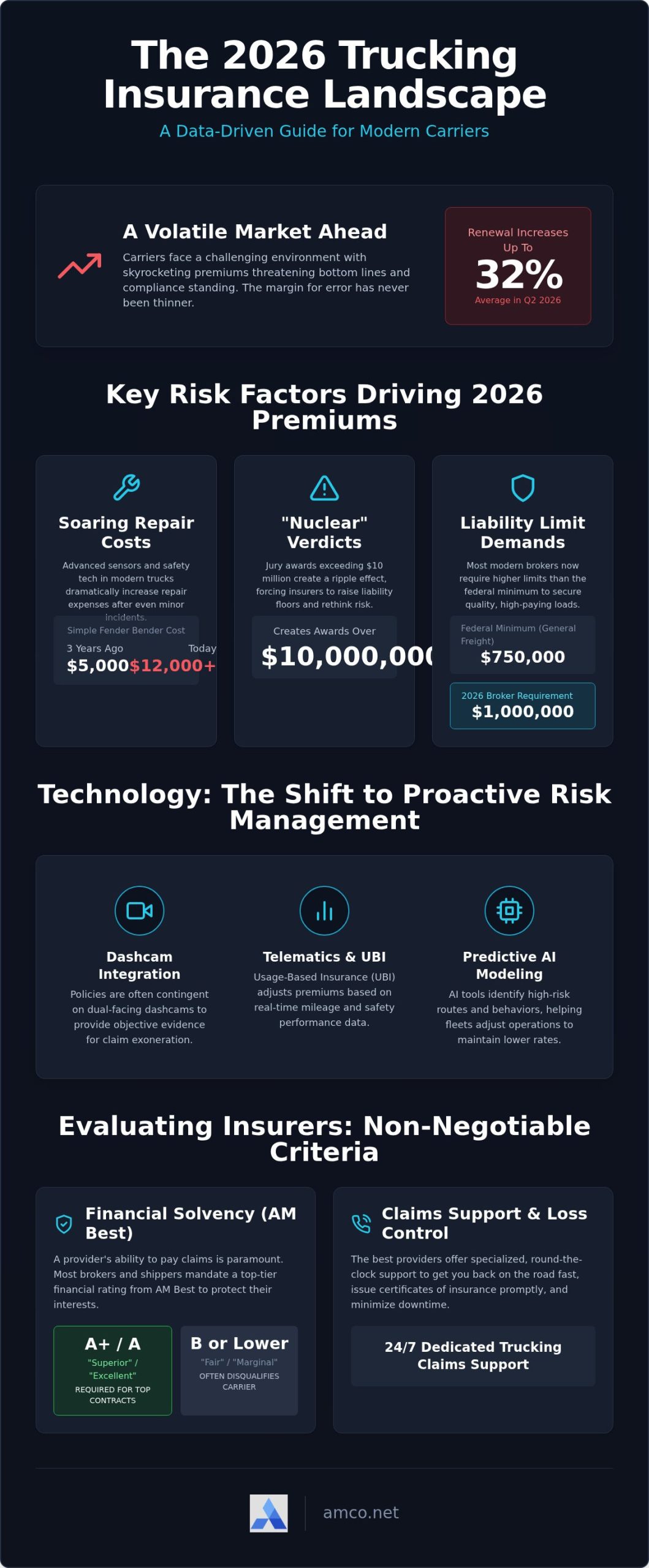
With trucking companies facing average renewal increases of up to 32% in the second quarter of 2026, the margin for error in your operating budget has never been thinner. Identifying the top trucking insurance companies is no longer just about finding the lowest quote; it's about securing a partner that understands the shifting regulatory environment. You're likely feeling the pressure of skyrocketing premiums and the frustration of waiting days for a certificate of insurance while your trucks sit idle. It's an exhausting cycle that threatens your bottom line and your compliance standing.
This guide will show you how to break that cycle. You'll discover the highest-rated providers for 2026 and learn a precise selection process tailored to your specific fleet or owner-operator needs. We'll examine the latest FMCSA mandates, including the new English language proficiency rules and non-domiciled CDL restrictions. We also provide a roadmap for securing the $1,000,000 liability limits that most modern brokers now demand. By the end of this review, you'll have the technical insight needed to lower your annual costs and maintain total regulatory alignment in the Texas market.
The 2026 market for commercial motor carriers is defined by volatility and a rapid shift toward data-centric underwriting. As renewal rates climb, the distinction between standard providers and the top trucking insurance companies becomes clear through their ability to manage complex risk profiles. Carriers aren't just looking at your loss runs anymore; they're analyzing the systemic pressures of the entire logistics chain. Understanding U.S. vehicle insurance regulations is the baseline, but the 2026 environment demands a deeper look at the external forces driving your premiums.
Operating costs have surged as a result of sustained inflation affecting vehicle components and specialized labor. A standard fender bender that cost $5,000 to repair three years ago now frequently exceeds $12,000 due to the integration of ADAS sensors and calibrated safety tech. Beyond physical damage, the industry is battling a sophisticated rise in freight fraud, forcing many carriers to tighten their cargo insurance requirements and vetting processes. Nuclear verdicts are jury awards that exceed $10 million, creating a ripple effect that forces insurers to raise liability floors and rethink their risk appetite for certain jurisdictions.
Because of these massive payouts, many brokers now refuse to work with fleets carrying less than $1,000,000 in primary liability. While the federal minimum remains $750,000 for general freight, the practical reality of the 2026 market makes the higher limit a prerequisite for securing quality loads.
The top trucking insurance companies have transitioned from reactive to proactive risk management. Leading insurers now use AI-driven platforms to ingest real-time ELD data, allowing them to predict driver fatigue or aggressive behavior before an incident occurs. This has led to the widespread adoption of usage-based insurance (UBI), where premiums fluctuate based on actual mileage and safety performance rather than static annual estimates. This shift rewards fleets that prioritize safety with immediate cost improvements.
Financial stability ratings from organizations like AM Best have become a non-negotiable metric for fleet owners. In an era of carrier insolvencies, a "Superior" (A+) or "Excellent" (A) rating ensures that your provider has the capital reserves to survive a catastrophic claim year. Choosing a carrier based solely on price in 2026 is a high-stakes gamble that few professional operations can afford to take.
Ranking the top trucking insurance companies requires a focus on operational longevity rather than just the lowest monthly premium. In the 2026 market, a carrier's ability to remain solvent while paying out complex claims is the ultimate measure of quality. Beyond basic federal insurance requirements, carriers must demonstrate a specific aptitude for high-stakes logistics environments like the Port of Houston or the Laredo border crossing. Reliability in these regions isn't just a preference; it's a requirement for staying on the road.
Financial ratings from AM Best provide a transparent look at a carrier's ability to meet its ongoing insurance obligations. Most freight brokers and shippers strictly require an "A" rating or better before they'll even consider a contract with a motor carrier. Choosing an unrated or "B" rated provider might save costs in the short term, but it often disqualifies you from the most lucrative long-haul contracts. This stability is vital for carriers handling high-value freight where a single loss could bankrupt a smaller, undercapitalized insurer. It's about protecting your authority as much as your equipment.
A carrier's reputation rests on how they act when things go wrong. The best providers offer 24/7 dedicated trucking claims adjusters who understand the nuances of the industry. This includes providing robust legal defense teams capable of mitigating the nuclear verdicts that have become a standard risk in 2026. Some top-tier insurers also provide in-house safety resources and dashcam data analysis to help you lower your CSA scores over time. This proactive approach prevents accidents before they happen, which is the most effective way to control long-term costs.
Comprehensive coverage goes beyond simple liability. It must include specialized motor truck cargo insurance to protect against theft, refrigeration failure, or loading damage. For Texas operators, the speed of state-specific filings is a critical metric. Delays in these filings can lead to suspended authorities or missed load windows. Key filings include:
Evaluating these technical factors ensures you align with the top trucking insurance companies that prioritize your fleet's long-term survival. You can streamline this evaluation by consulting with a Texas-based broker who understands the local DOT landscape and carrier performance records.
Selecting a carrier in 2026 requires matching your operational risk with a provider's specific "appetite." While many insurers offer standard liability, the top trucking insurance companies distinguish themselves through specialized endorsements and industry-specific claims handling. As an independent agency, AMCO.NET LLC provides access to these leading national carriers, allowing Texas operators to compare technical policy language alongside premium costs. Industry benchmarks, such as those found in the top trucking insurance companies report by Forbes, confirm that financial stability remains the primary indicator of a carrier's long-term viability.
Progressive Commercial remains the most accessible entry point for Texas startups and new authorities. They're often the only top-tier carrier willing to provide a quote to drivers with less than two years of CDL experience, provided the driving record is clean. Northland Insurance offers a different advantage, showing a higher tolerance for diverse cargo types and equipment that's more than ten years old. If you're launching a new authority, focus on maintaining a high credit score and completing a formal safety training program to improve your initial quote trajectory with these providers.
For operations with 10 or more units, Sentry Insurance provides customized risk management solutions that go beyond basic coverage. Their safety programs are designed to integrate with your existing fleet management software to identify high-risk patterns before they result in a claim. Great West Casualty Company is often considered the gold standard for specialized hauling due to their "Identity" policy, which includes unique features like specialized cargo valuation. Both carriers frequently reward fleets that maintain low CSA scores with dividend programs or significant renewal discounts, essentially turning safety into a profit center.
Berkshire Hathaway Homestate Companies fills a critical gap for heavy haulers and oversized load specialists. They provide the high-limit capacity necessary for complex projects that require $2,000,000 or more in primary liability, a requirement that's becoming more common for high-value government and infrastructure contracts in 2026.
Texas-based motor carriers face unique geographical challenges that require specific carrier appetites. Intermodal carriers serving the Port of Houston need insurers that understand UIIA requirements and the fast-paced nature of container logistics. Similarly, the energy sector requires carriers with a high tolerance for oilfield-related hauling, which often involves off-road exposures. For those operating near the southern border, a Border Crossing endorsement is essential because it extends coverage to specific commercial zones across the international bridge where standard domestic policies typically cease to provide protection.
Selecting from the list of top trucking insurance companies requires a methodical audit of your daily operations. A policy that serves a dry van fleet in the Midwest won't necessarily protect a flatbed operator hauling steel through the Port of Houston. The goal is to eliminate coverage gaps that lead to out-of-pocket losses while avoiding "premium bloat" from unnecessary endorsements. Following a structured selection process ensures you secure the best possible terms for your specific risk profile.
Cargo protection isn't a one-size-fits-all solution. Reefer breakdown coverage, for example, varies significantly between carriers; some exclude losses caused by driver error or inadequate maintenance, while others provide "all-risk" protection. If you're hauling high-value electronics or pharmaceuticals, your cargo limits must align with your largest freight broker's requirements. Most reputable brokers now demand a minimum of $100,000 in cargo coverage, but specialized loads often require $250,000 or more to clear the loading dock.
Your geographical footprint significantly impacts your risk rating. An unlimited radius policy offers maximum flexibility but comes with a higher price tag than a 500-mile regional radius. Garaging location also matters. Parking your equipment in high-theft areas like Houston or San Antonio can affect your physical damage rates. Some carriers have strict "no-go" zones and may refuse to write policies for fleets that frequently transit through New York City or California due to the increased litigation risk and higher accident frequency in those regions.
Finding the right balance between cost and comprehensive protection is easier when you have professional guidance. You can request a customized fleet comparison to see which carrier currently offers the best incentives for your specific routes and equipment types.
Choosing a direct-to-carrier model often restricts your operational flexibility, as these insurers can only offer their own proprietary products. In contrast, an independent agency provides a strategic advantage by aggregating the market and offering access to multiple top trucking insurance companies through a single application. This approach is vital in 2026, where carrier appetites change quarterly based on loss ratios and regional litigation trends. By partnering with a broker, you aren't tied to a single provider's shifting risk tolerance. You gain a professional partner who shops the entire market on your behalf at every renewal.
A local agency understands the technical nuances of the Texas Department of Transportation (TxDOT) and the unique pressures of the Lone Star State's logistics hubs. Whether you're navigating the congestion of the I-35 corridor or managing cross-border logistics in Laredo, having an agent who speaks the local language of trucking is invaluable. This expertise ensures that your certificates of insurance (COI) are issued accurately and that mid-term changes, like adding a new unit or driver, don't result in operational downtime. It's about maintaining continuity in a high-speed industry.
AMCO.NET LLC has been a fixture in the Texas logistics community, providing specialized commercial trucking insurance in Houston since 1987. Our history in the region allows us to understand the specific risks associated with Port of Houston drayage, Dallas-Fort Worth distribution, and the energy-sector hauling prevalent in West Texas. We don't just sell policies; we build complex risk management systems that leverage our long-standing relationships with the top trucking insurance companies to secure the most competitive rates available for our clients. Our independent status means our loyalty remains with the fleet owner, not the insurance carrier.
The 2026 insurance market moves fast. We start your renewal process 60 days before your current policy expires, conducting a proactive market review to ensure your current carrier still offers the best value. This proactive stance prevents last-minute premium spikes and allows time to address any safety score issues or ELD data gaps that might affect your pricing. Our team handles the administrative burden of the following critical tasks:
Managing a trucking business is difficult enough without the added stress of insurance administration. You can focus on your fleet while we handle the technical details and carrier negotiations. Get a fast trucking insurance quote from the top carriers today and see how a specialized Texas agency can improve your operational bottom line.
The 2026 trucking landscape demands a transition from simple cost-cutting to strategic risk management. Success for Texas motor carriers now depends on aligning with top trucking insurance companies that offer the financial solvency required by major freight brokers. As the market shifts toward data-driven underwriting and usage-based models, your choice of carrier determines your ability to secure high-value contracts and maintain a sustainable bottom line. Reliability in claims handling and technical filing speed are no longer optional features; they're the foundation of your authority.
Since 1987, AMCO.NET LLC has provided this stability for operators across the state. Our Houston-based team leverages deep relationships with A-rated national carriers to find the precise balance of coverage and price for your specific fleet. We understand the technical nuances of Texas state filings and the operational pressures of modern logistics hubs. You've built a business that keeps the economy moving; we're here to provide the professional support that protects that legacy through every mile of the journey.
Compare the Top Trucking Insurance Companies for Your Fleet Now and position your operation for long-term growth and total regulatory compliance.
Progressive Commercial is widely recognized as the most cost-effective option for new authorities in 2026. While many top trucking insurance companies require two years of operational history, Progressive uses a broader risk model that accommodates startups. However, "cheapest" is subjective and depends on your driver’s MVR and credit score. Comparing multiple quotes through an independent broker is the only way to verify the lowest actual rate for your specific filing.
An insurance carrier is the company that actually underwrites the risk, collects premiums, and pays out claims. Examples include Progressive or Sentry. An insurance agency, like AMCO.NET LLC, acts as an intermediary or broker. Agencies represent the fleet owner, providing access to multiple carriers to find the best fit. Using an agency allows you to shop the market without submitting separate applications to every carrier individually.
Yes, Progressive is a leading provider of commercial trucking insurance throughout the state of Texas. They offer a full suite of coverages, including primary liability, physical damage, and motor truck cargo insurance. Their presence is particularly strong in major hubs like Houston and Dallas, where they provide digital tools for managing filings and certificates. They are a primary choice for Texas-based owner-operators seeking flexible payment options.
While the FMCSA federal minimum remains $750,000 for general freight, you practically need $1,000,000 in primary liability to secure loads from most brokers and shippers. Additionally, new authorities should carry at least $100,000 in motor truck cargo insurance. If you're hauling specialized equipment or hazardous materials, these requirements can increase to $5,000,000. Always check your specific contract requirements before finalizing your policy limits to avoid losing loads.
AM Best ratings are independent assessments of an insurance company’s financial strength and ability to pay claims. Ratings range from A++ (Superior) down to D (Poor). For truckers, these ratings matter because many freight brokers refuse to work with carriers insured by companies rated below an "A-". Choosing a highly-rated carrier ensures that your insurer has the capital reserves to handle catastrophic losses without going insolvent, protecting your business.
Yes, you can still obtain coverage, but your options will be limited to non-standard or surplus lines markets. High CSA scores and recent accidents signal increased risk to the top trucking insurance companies, which often leads to higher premiums or restricted coverage terms. In these cases, working with an experienced broker is essential. They can help you present a corrective action plan to underwriters to prove you're actively improving your safety culture.
The best insurance for Houston-based owner-operators is a policy that includes specialized endorsements for port operations and local drayage. Because Houston is a major logistics hub, you need a carrier that understands the specific risks of the Port of Houston and the I-10 corridor. Progressive and Northland are frequently cited as top choices for their local claims expertise. A policy with high physical damage limits is also recommended due to local theft risks.
Most top-tier carriers now provide COIs almost instantly through digital portals or mobile apps. When you work with a professional agency, your dedicated agent can often generate and send a certificate to a broker within minutes during business hours. This speed is critical for securing loads in a competitive market. If your current provider takes more than 24 hours to return a COI, it's likely time to evaluate more modern insurance partners.